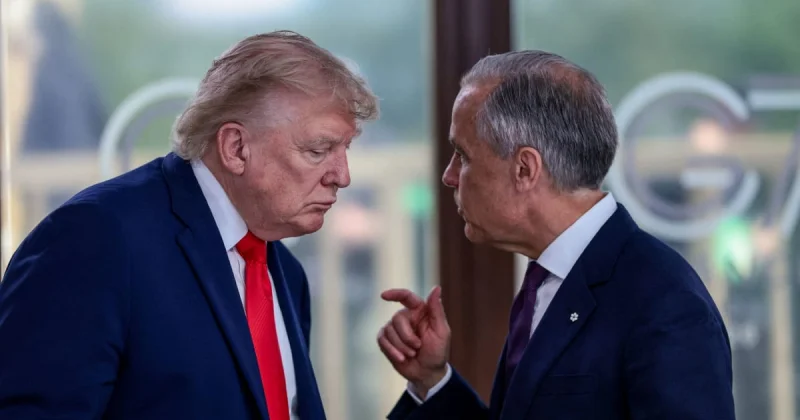
Canada has answered Donald Trump’s tariff campaign with tariffs of its own, nearly dollar for dollar, and the fight is now exposing the limits of a pressure strategy built on size. Ottawa has also banned U.S. alcohol sales in most provinces, while Washington is preparing to push auto and auto-parts tariffs to 50 percent unless a U.S.-friendly deal is reached before January 1, 2027.
That deadline matters because Canada is not a marginal trade partner trying to absorb the blow. The United States economy is ten times the size of the Canadian economy, but the leverage has not worked the way Trump’s team expected. Along with China, Canada is one of only two countries that have retaliated against Trump’s tariffs, and that response is already hitting autos, gas, steel, aluminum and lumber. Many Canadian goods have faced 50 percent tariffs since July under Section 338, while other exports face duties of 25 to 50 percent under Section 232. The original 25 percent tariffs on Canada and Mexico, imposed under the International Emergency Economic Powers Act, were later overturned by the Supreme Court.

The dispute is moving beyond a simple tariff match. Robert Lighthizer once told Chrystia Freeland that the United States would get its way ten times as often because its economy was ten times larger, and that logic now looks less certain than it did in Trump’s first term. Freeland has turned that experience into a new book, Unreliable Boyfriend, and the title fits the mood of a trade fight in which pressure has produced retaliation rather than capitulation.
That is the part the White House cannot fully control. Trump has called Canada “one of the worst countries in the entire world,” but the tariffs have already done damage on both sides of the border, including in northern border states that depend heavily on trade and are headed into tough midterm races. The administration expected economic pain to force Ottawa back to the table; instead, Canada has hardened its response, and the United States now appears to be backing down in some areas even as it threatens more in others.
What happens next is straightforward and messy at the same time. If Washington follows through on the auto tariff increase, the conflict will deepen before January 1, 2027. If it does not, Trump’s broader claim that economic size alone can dictate the terms of trade will look weaker than ever, and other countries may decide Canada found the answer first.