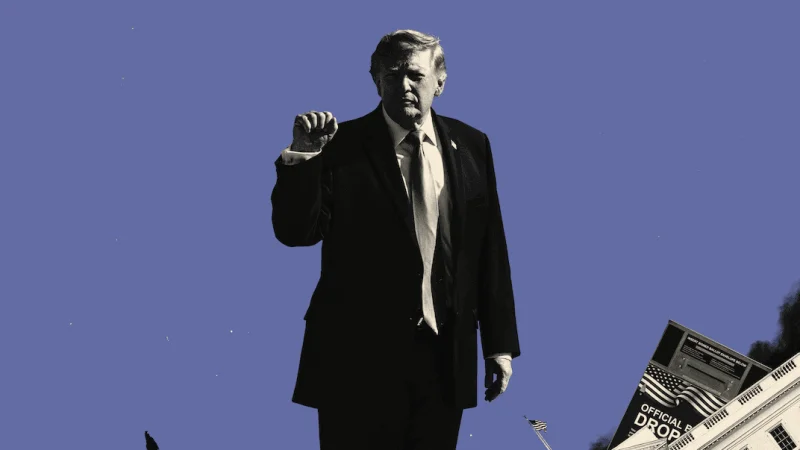
The signs of a midterm blue wave are everywhere, but the picture is still clouded by sketchy polls and by a political climate that has become harder to read than the numbers suggest. That is the warning and the headline: momentum may be shifting, yet certainty remains out of reach.
That is why people are searching for how to vote in the US midterms now, because this election is being framed as more than a routine contest. It is being cast as a possible rebuke to Donald Trump, who remains at the center of the story and whose political reach still shapes how the coming vote is understood.
The case for a swing is built on more than a mood. Campaigns have never been more subject to the desires of the wealthy, and Trump is still presented as a force with the impulse control of a toddler and the authority or inclination to spark an insurrection, destabilize the Western alliance, live-stream an execution, or threaten to end a whole civilization. Mark Milley called him fascist to the core, and the argument here is that a growing share of the electorate seems to recognize both his uniqueness and the mayhem he has instigated from the Oval Office.

But that recognition does not make the forecast clean. Polls are sketchy because they often miss who actually turns out, who stays home, and how fast opinions harden in a polarized electorate. A survey can catch a wave of anger or fatigue and still miss the turnout mechanics that decide close races, so the warning is baked into the optimism: signs of movement are visible, but the numbers remain a rough guide rather than a promise.
That caution matters because Trump is not drifting out of view. The piece says he still has plenty of time to inflict further damage on the Republic while milking it for profit, and that since the second Inauguration the Trumps and their satraps have operated with commercial cunning. Every week brings word of a new grift, a new meme coin, a Melania doc, a pay-for-access club, or fresh funds from Gulf grandees looking for leverage. The political story and the money story are moving together.
One exchange captures the wider unease. Kristen Welker asked Todd Blanche whether he would cross an ethical or legal line if the President asked him to do something that crossed one, and Blanche replied that the President would never ask him to do something unethical or illegal, that he never has and never will. It was a tidy answer, but it sat beside a far messier record, and that gap is part of why the midterms are being watched as a reckoning rather than a calendar event.
If the blue wave does arrive, it will not just be a bad night for Trump. It will be a visible measure of how far his political hold has weakened, even as he keeps pressing the system for advantage. If it does not, the more unsettling conclusion is that the warnings were right and the electorate was not yet ready to act on them.