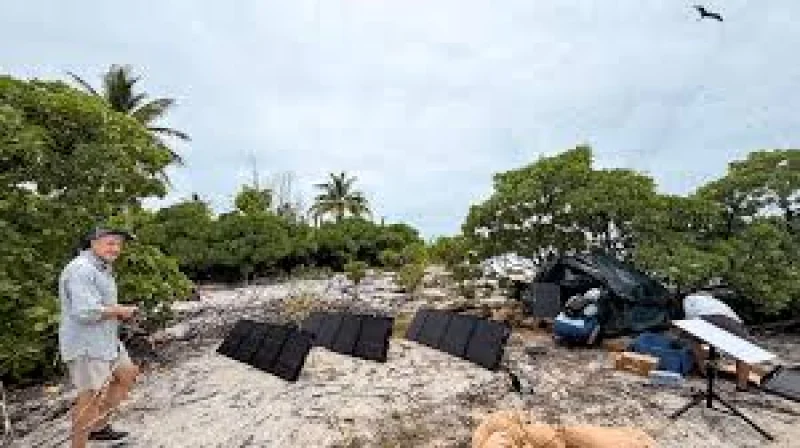
Purdue University is launching an expedition this week to search for Amelia Earhart's lost plane, sending researchers back into one of aviation’s most stubborn mysteries. The new effort centers on Nikumaroro, the place that has drawn fresh attention as the latest possible clue in a search that has gone nowhere for decades.
It matters now because Earhart's disappearance has never stopped inviting new attempts, and this one comes with the weight of a question first raised in 1937: what happened after she and Fred Noonan vanished on the final leg of a world flight attempt? Earhart was trying to become the first woman to fly around the world when she disappeared on July 2, 1937, at 39 years old.
By then, her Lockheed 10E Electra had already covered 22,000 miles, and she was still 7,000 miles from her goal. The plane had been loaded with 1,150 gallons of fuel, with the passenger seats removed to make room for the extra tanks, as Earhart and Noonan set out on the 2,556-mile final leg from Lae, New Guinea, to Howland Island.
Howland itself is only 2 miles long and less than 2 miles across, which helps explain why the flight drew so much anxiety on the ground and in the air. The US Coast Guard vessel Itasca was waiting off the island with fuel, and radio operators received messages from Earhart's plane. In one, she said, “We must be on you, but cannot see you. Gas is running low. Been unable to reach you by radio. We are flying at 1,000 feet.” In another, she added, “We are on the line of position 157-337. Will repeat message. We will repeat this message on 6210 kilocycles. Wait. Listening on 6210 kilocycles. We are running north and south.”
That is the friction still hanging over the story: despite dozens of searches and an unprecedented US effort that swept an area around the size of Texas, the plane has never been found. Dorothy Cochrane said the final approach was brutally hard, noting that they were flying through the night and trying to pick out “this tiny island” with clouds in the area and the sun in Earhart's face. The latest Purdue expedition will survey the island area this week, but the real test is whether it can turn a new image into the answer that has eluded searchers for 87 years.