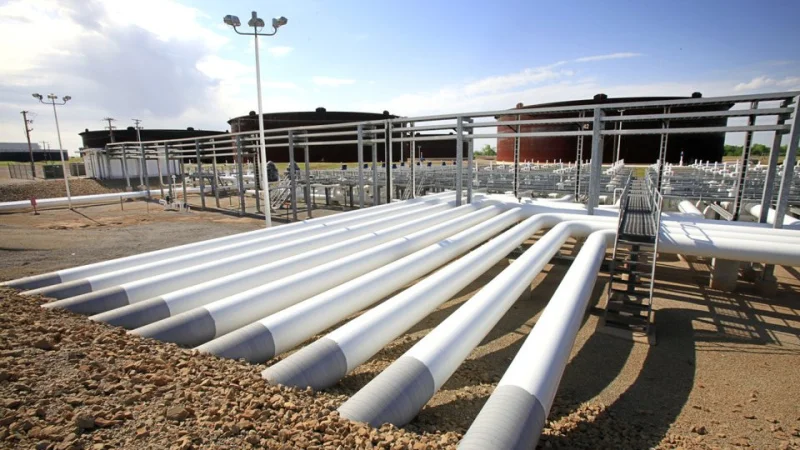
The American Petroleum Institute reported an 11.1 million barrel drop in U.S. crude inventories for the week ended October 9, a move that immediately tightened the market’s near-term supply picture. Traders got the number before the EIA released its own report later in the day, and that timing kept the inventory readout front and center.
The size of the draw matters because it points to a market that has been pulling barrels through refineries and out through exports at a faster pace in recent weeks. Even without a government figure yet, an 11.1 million barrel decline is large enough to change expectations for U.S. crude balance and to nudge pricing assumptions while the day’s next data point is still ahead.
That is the reason the market leaned on the API number instead of waiting. The EIA was scheduled to publish later today, and its figures may not match the private estimate. When one report shows a steep fall and the official update is still pending, the gap itself becomes part of the story because it can either confirm a tightening trend or soften it.

The broader energy backdrop was already signaling a market under strain. Russian crude output rose about 65,000 bpd in September to 8.43 million bpd, while OPEC+ production reached about 39.07 million barrels per day, up roughly 900,000 barrels per day from August, with most of that increase coming from Saudi Arabia. At the same time, Middle Eastern Gulf exports rose by 4.4 million bpd and recovered to around 75% of pre-war levels, keeping global flows in motion even as demand for steady supply stayed strong.
Crude prices reflected that tight tone. WTI was sitting at $94.44 on the hourly chart, with resistance first at $95.19 and then at $96.06 and $96.96, while support sat at $93.59, $92.75 and $91.70. Brent also remained tight and focused on shipping security after two commercial vessels sank near the Strait of Hormuz, including one that had been damaged in an earlier attack.
There were other energy pressures building in the background as well. U.S. working gas in storage stood at 3,500 Bcf for the week ended October 2, 2% above the five-year average, and the next storage report was due Thursday, October 15. Natural gas was trading at $3.25/MMBtu, while QatarEnergy had told Edison to expect no deliveries until at least December, forcing Edison to look largely to U.S. LNG to replace the lost supply.
For crude traders, though, the immediate focus stayed on the API’s sharp draw and the official number still to come. If the EIA comes close, the case for tighter U.S. fundamentals gets stronger; if it comes in materially different, the market will have to reset just as quickly.