The Mexican Army has acknowledged in newly disclosed official documents that the Guerra Sucia was completely illegal, and that the abuses tied to the so-called death flights included illegal detention, interrogation, execution and bodies thrown into the sea. The material comes from an internal investigation that also found the Brigada Blanca had no legal basis and used tactics completely outside the law.
Jacinto Rodríguez said the files are striking because they reveal details that were not known before about how the operation worked, who carried it out and the military logistics behind it. He said the investigation reviewed 32 folders and 16 annexes, for roughly 15,000 pages, and that the disclosure now matters because it turns a long-denied chapter of state violence into something the Army itself put on paper.

The documents sit inside a military inquiry into the llamados vuelos de la muerte, the clandestine flights associated with the forced disappearance of people during the 1970s and 1980s. They say detained people were taken to Base Aérea Militar número 7, killed and then thrown into the sea, while Campo Militar número 1 was used for illegal detentions and interrogations. The same material also recognizes that the Army bought aircraft manufactured in Israel and trained military personnel in Israel, using planes capable of taking off and landing in very short spaces.
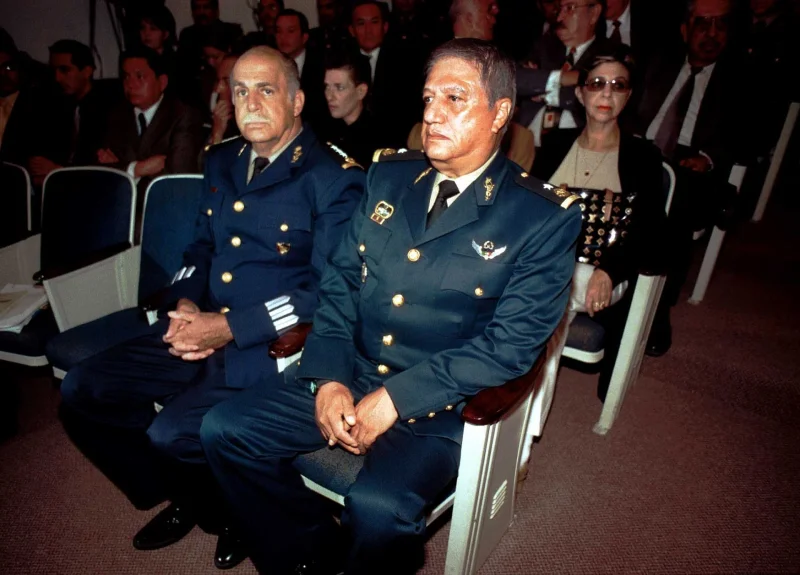
That admission is powerful because it comes from inside the institution that carried out the inquiry more than 20 years ago. But the same files also narrow the blame to three officers — generals Francisco Quirós Hermosillo and Mario Acosta Chaparro, plus major Francisco Javier Alonso — even though the documents describe an operation large enough to involve military logistics, aircraft, detention sites and two dozen commanders or more. Rodríguez said that is the part that does not add up: a complex system of disappearance cannot easily be reduced to three men when the paperwork itself points to broader institutional participation.
The question left by the records is not whether the violence happened. The military’s own papers now concede that it did. The unresolved issue is how an institution that documented such a wide operation concluded, on the same file trail, that only three commanders carried the weight of responsibility.