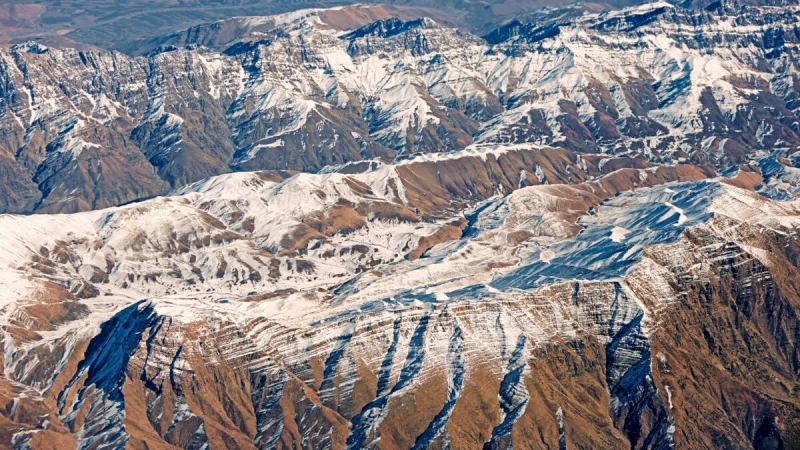
Researchers have identified two giant tears in the Arabian Plate beneath southeastern Iran, a finding that adds an unusual snapshot of plate break-up to a region already deep in a slow collision. The study, published in Nature Geoscience, describes one tear at the point where the Zagros collision zone meets the Makran subduction zone and a second, smaller vertical tear closer to the surface by the Makran Trench.
The work matters now because it puts fresh evidence behind a process that unfolds over millions of years but is rarely seen in such detail. Using a network of 69 seismic monitoring stations and recordings taken between March 2017 and September 2018, the researchers say they captured a live picture of how tectonics can shift from oceanic subduction toward continental collision.
What they found is not just a crack, but two different tearing modes operating in the same broad system. In the Makran subduction zone, oceanic lithosphere has continued down to at least 450 km, while west of it in the Zagros collision zone, continental lithosphere has gone no deeper than 300 km. The study links that contrast to east-southward slab tearing and detachment, a pattern that helps explain why the plate is failing in stages instead of all at once.

The second tear appears to have begun at the junction between the Makran Trench and the transform boundary, then propagated southward as the continental plate advanced northward. That leaves a friction point inside the model itself: the two tears are described as starting independently, yet the continental-oceanic boundary between them is steadily eaten away as tearing continues. In other words, the plate is splitting separately in two places while the material between those breaks is being consumed.
That progression is what makes the study more than a local map of damage. The Arabian Plate contains both oceanic slab material from the ancient Neo-Tethys Ocean and continental rock, and the density difference between them is described as one driver of the ruptures. The second tear is tied more closely to plate movement than to that rock contrast, which suggests the system is being shaped by both composition and motion at once.
The models indicate the two tears have been advancing for several million years and will likely eventually meet. The open question is not whether the process keeps changing the plate, but where the final connection happens as the intervening boundary segment disappears.