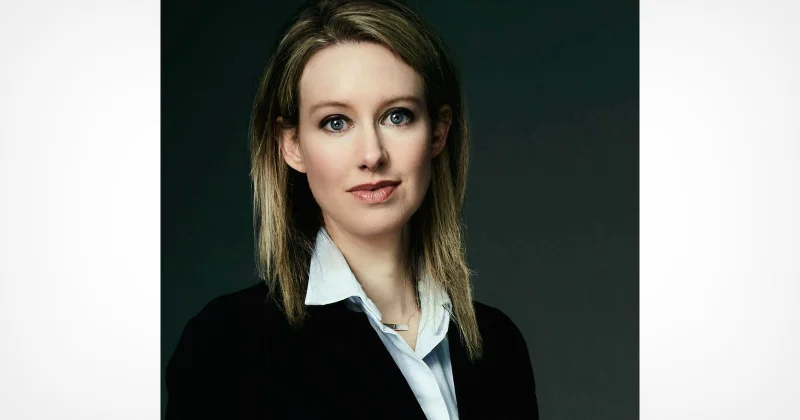
Photographer Benjamin Rasmussen says a 2015 Elizabeth Holmes shoot for Businessweek was not the polished profile it appeared to be from the outside. He says Theranos tightly controlled the image-making, then tried to steer him toward a very different story about its founder.
He said the push became clear when the company’s PR team moved from presenting Holmes as a lone Silicon Valley figure to insisting that Theranos was really about a team of women scientists. Rasmussen said he and his assistant, Ryan Brown, decided to get the shot they came for anyway, even as the PR team kept pressing for the group portrait it wanted.
That recollection matters now because Rasmussen is only recently describing the shoot in public, after reacting to a trailer for a Nathan Fielder documentary. The timing gives his account a new audience at a moment when Holmes’ name still carries the weight of her 2022 conviction for defrauding investors and her current confinement at the Federal Prison Camp in Bryan, Texas.

Rasmussen said Holmes had already been framed as a Steve Jobs-style founder, with a black turtleneck and a piercing gaze, before Theranos changed course. He said the PR team decreed that he could shoot only women scientists in lab coats, and that he and Brown responded by turning the session into a controlled deception of their own: a white window shade became the backdrop, friendly corporate-looking scenes were staged, and Holmes was moved closer and closer to the window until he got a head-and-shoulders image of her looking straight into the camera against white.
He said Brown held a huge reflector behind him to block the PR team’s view while he gave super-specific directions to scientists who were not even in frame. Rasmussen said the result was a setup that felt less like a normal portrait session and more like theater. He later received feedback from Theranos that was not good.
The friction in his account is plain. Rasmussen said the PR team would not have known the full extent of the crisis Theranos was facing while the pictures were being made, but he later wondered whether the entire operation had been a facade. What he experienced in the room, he said, did not look like a casual photo assignment. It looked like a company trying to control the picture before anyone else could decide what Theranos really was.