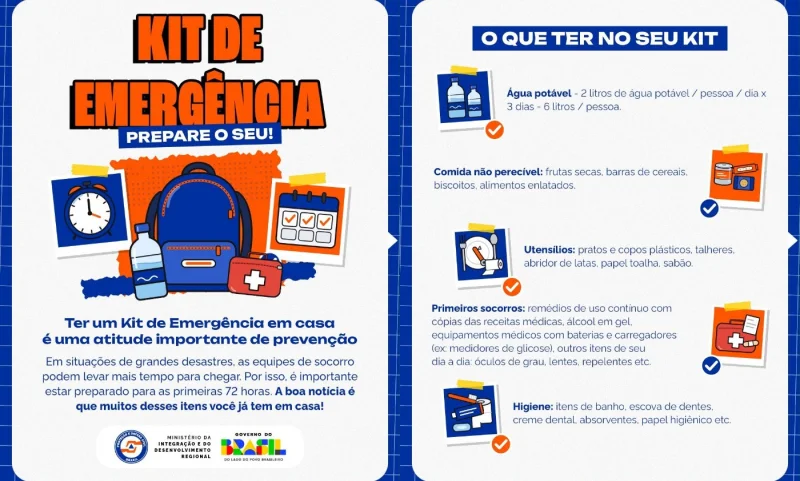
Defesa Civil Nacional published a routine guide on Friday explaining how to prepare an emergency kit for up to 72 hours, and the post quickly set off questions online about whether Brazil was facing an imminent risk. The agency later said the recommendation was preventive, permanent and not tied to any specific threat or active national alert.
That reaction came because the guidance landed like a warning to many readers even though it was framed as preparedness. The Ministry of Development Regional said it does not amount to a call for extraordinary stockpiling, and the Civil Defense page itself replied in a comment that there was no new reason for the recommendation. In other words, the timing made the post look urgent, but the message behind it was routine.
The guidance is meant for moments when help may take time to reach some places, especially in large disasters where access is difficult. The post says a kit should cover food, water, medicine and other essentials for three days, with supplies checked every six months. It recommends 2 liters of water per person per day, or 6 liters for the full period, along with dried fruit, cereal bars, crackers and canned food. It also lists plastic plates and cups, cutlery, a can opener, paper towels and soap.

It goes further, advising people to pack regular medication with copies of prescriptions, alcohol gel, medical equipment with batteries and chargers, glasses or contact lenses, repellent, toiletries, a toothbrush, toothpaste, sanitary pads, toilet paper, a change of clothes and comfortable shoes. That long list is what made the post stand out: it was not a vague reminder to be careful, but a concrete checklist for households that may need to manage without outside help for a short period.
Still, the friction came from how the public read it. Many users treated a preparedness post as a sign that something specific was about to happen in the country, even though the official explanation said the opposite. The same kind of guidance has appeared before: in April, Defesa Civil do Paraná made a similar Instagram post, and other state and municipal civil defense agencies have published comparable advice as part of regular self-protection content.
That is why the post matters now. It did not point to a new threat, but it showed how a preventive message can be mistaken for a live warning when anxiety is already high. For now, the answer from Civil Defense is simple: the recommendation stands as standard preparedness, not as evidence that a national alert has been issued.