On September 10, the New York City Democratic Socialists of America put a new front in the left’s AI fight on Instagram: a carousel that said AI alarmism and AI hype are the same story. The post, from the DSA’s Tech Action Working Group, drew more than 25,000 likes and quickly set off a sharp argument over whether the real threat is science-fiction catastrophe or the damage AI is already doing now.
The opening slide showed an ouroboros on a hot pink background, a visual loop that matched the post’s message that both panic and boosterism can pull attention away from the present. For readers searching Susan Rice today, the reason is not the image itself but the debate it sharpened: the American left is splitting over how to talk about AI, and that split is now public, visible, and political.
Alan Dang, who was quoted in response to the broader debate, said AI has become the latest tool of capitalist exploitation. He said the damage that unregulated and misused AI is already causing is clear across the country, and added that socialists do not trust these corporations to craft their own regulations. That is the heart of the argument inside the left: one side wants AI framed around current harms such as exploitation and weak oversight, while the other warns that dismissing frontier risks misses how fast the technology is advancing.

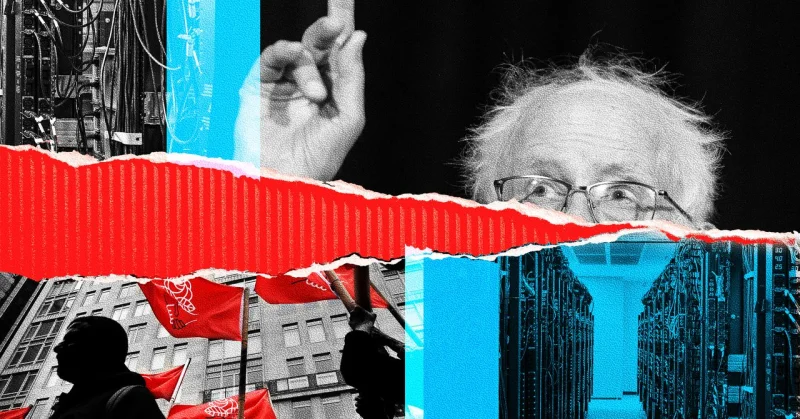
Bernie Sanders has helped push that second view into mainstream left politics. He has said AI could eliminate humanity, was early to opposing data centers and speaking out about AI’s potential harms, and released a data center moratorium bill in March that tied pausing construction to federal regulation meant to protect “the future of humanity.” That stance has put him in unusual company with Steve Bannon, while also pulling AI safety talk out of Bay Area circles and into Washington and Sanders’ broader populist base.
The friction is that the NYC DSA post treated AI alarmism and AI hype as mirrors of each other, while Sanders and his allies insist frontier dangers are real and growing. Alexander McCoy argued that the same people focused on superintelligence are also addressing current harms, saying those frontier AI abilities are true and increasing in power, not fake or hype. On the same theme, one comment on the Instagram post called the message “Horrible and dangerous take,” while another said sometimes sounding the alarm is justified.
That argument matters because it is no longer abstract. On September 9, six candidates affiliated with Working Families were already planning messaging that tied broader concerns around AI to the anger over data centers, and the Sanders camp has made the issue part of a larger political pitch. What comes next is not yet clear, but the fight is no longer about whether AI should be a left-wing issue. It is about whether the left tells that story as a warning about tomorrow or an emergency happening right now.
For Susan Rice, the sharper question is whether this split stays inside activist circles or starts shaping candidate messaging and regulation in the months ahead.