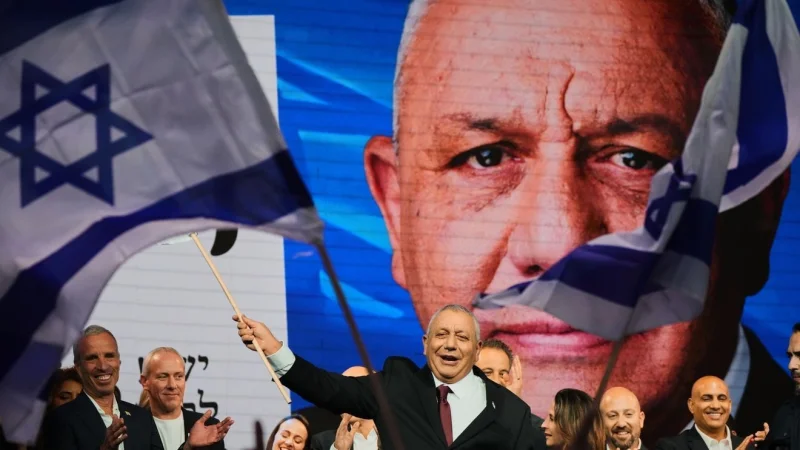
Israel’s president has chosen Gadi Eisenkot to try to form a new government, the next formal move after the election left neither Benjamin Netanyahu’s camp nor his opponents with a majority. Isaac Herzog informed Eisenkot on Saturday night that he intended to task him with the job, and the formal appointment was set for Sunday at the president’s residence in Jerusalem.
The choice matters because the numbers in The Knesset still do not point to an easy governing path. Eisenkot’s bloc won 48 of the 120 seats in the October elections, while Netanyahu’s camp took 53, leaving both sides short of the 61 needed to govern on their own. Netanyahu’s religious-nationalist coalition lost its majority in the election on 27 October, even as his camp remained the largest bloc in parliament.

Eisenkot, who leads the Yashar party, used his public message to frame the moment as one of emergency rather than celebration. “Now is the time to form a national emergency government. I will do everything to ensure we are worthy,” he posted on X. His record is one reason the president turned to him: he served as military chief of staff from 2015 to 2019, commanded the military during the 2006 war with Hezbollah and devised the so-called Dahiya doctrine.
That history gives him a profile that is broad enough to appeal across political lines, but the arithmetic remains unforgiving. During consultations with Herzog, Eisenkot received the endorsements of both Arab-majority lists, yet it is still unclear whether his bloc would accept their support in a governing coalition. Without those votes, or another route to 61 seats, the task handed to him could expose the same deadlock in a new form.
His positions also suggest the shape of the fight ahead. Eisenkot has vowed to crack down on extremist West Bank settlers who have attacked Palestinians with impunity, opposed the creation of a Palestinian state and promised to end Hamas’s rule in Gaza and destroy the Islamist movement’s military wing. That mix may help him argue for a broader alliance, but it also leaves open the central question after Sunday’s ceremony in Jerusalem: whether he can turn endorsements into a coalition that can actually survive in the 120-seat chamber.