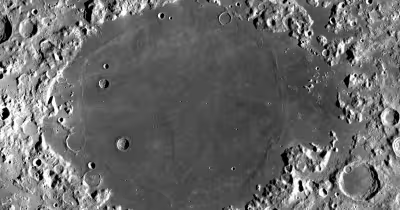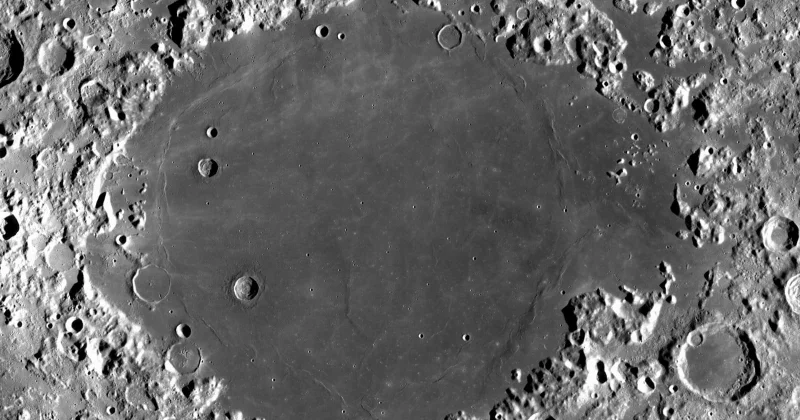
NASA scientists have identified a new crater on the Moon’s eastern edge that formed sometime between April 11 and May 22, 2024, and it is now being described as the largest newly formed crater ever found in the solar system. The crater, McGetchin, measures 728 feet wide and 141 feet deep.
Robert Wagner was the one who first noticed it during a routine data-quality check, when a bright spot ringed by a dark halo caught his eye on a giant Moon map. He said he stopped, dropped everything and started looking into what the spot was, then compared before and after images until the shape of the new crater became clear.
The discovery gives the finding its force. McGetchin was struck by a comet or asteroid the size of a three- to six-story building, and scientists estimate that an impact of that scale on the Moon happens only about once in a century or even longer. NASA’s Lunar Reconnaissance Orbiter has been circling the Moon for more than 17 years, and its team has already identified at least 1,000 new impact craters while flagging 100,000 more surface changes from impacts or ejecta.

That wider record matters because the Moon has no atmosphere to slow incoming space rocks, so direct hits can still carve the surface in plain view. It also shows how much the spacecraft can still catch: scientists estimate that rocks about 43 inches wide create about 140 new craters across the Moon each year, which makes the biggest fresh crater stand out all the more sharply when it appears.
There is still a gap inside the discovery. Scientists have not pinned down the exact impact moment, only that it fell between April 11 and May 22, 2024, and they have not settled whether the object was a comet or an asteroid. That uncertainty does not weaken the result; it is part of what makes McGetchin a sharp reminder that even the Moon can still change fast enough for one person, on one routine check, to catch the moment it happened.
After the crater was found, scientists using Diviner detected a 4-mile-wide area around it that was about 16 degrees Fahrenheit cooler at night than the surrounding ground. The cold spot suggests the blast changed more than the rim itself, and it leaves the next question hanging where the data cannot yet answer it: what exactly hit the Moon, and at what precise time?