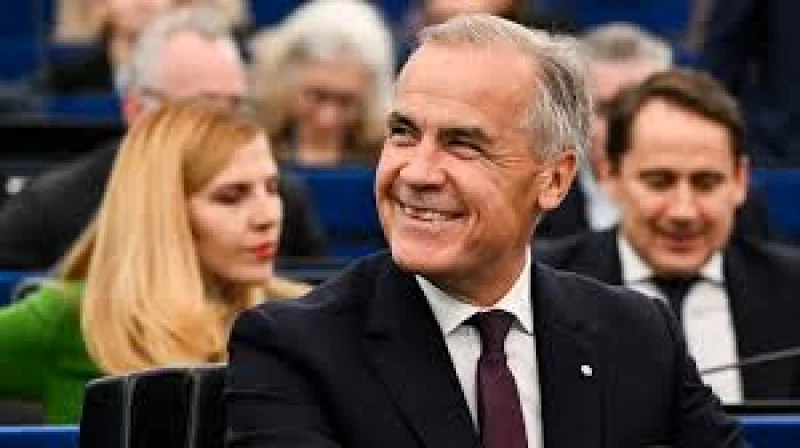
Ursula von der Leyen offered Canada the chance to become the European Union’s first associate member on Wednesday, putting forward a deeper political and economic link at a moment when both sides are reassessing their ties with the United States. Speaking in Strasbourg with Mark Carney present, she said she wanted to open the door to a relationship at the highest possible level.
The timing matters because Carney has been pushing for a unique alliance with the European Union while Canada tries to cut its heavy dependence on US trade. He has also made clear that Canada would not be subjugated in trade talks with the White House and, last month, broke off those talks while introducing retaliatory tariffs on billions worth of US goods. For readers searching Canada EU today, this is no abstract diplomatic idea: it is being floated by leaders who are already acting on the belief that the old trade map is no longer safe.
Von der Leyen framed the offer as an upgrade of an existing relationship, saying the current EU-Canada trade deal would be turned into an alliance for the future. Canada and the EU already have that trade pact plus a web of bilateral agreements, but the new pitch goes much further. She said the two sides could build a common prosperity and economic security space, set up a tech alliance, integrate defence industrial bases and make the Arctic a flagship joint project. She also pointed to cooperation on energy, critical minerals, batteries, AI, quantum computing, cybersecurity and economic security.

That is where the proposal runs into its hardest question. The 27-member EU has never had an associate membership category, and it remains unclear what such a status would mean for access to the single market or for the obligations that would come with it. The bloc already has close ties with Norway, Iceland and Switzerland, but associate membership would be something new, not a simple extension of an existing model. In other words, Brussels is offering closer integration before it has defined the rules for what closer integration actually is.
The push is also a response to a wider trade shock. The two sides have been moving closer since Donald Trump returned to the White House and raised tariffs on both old allies, while Trump has repeatedly talked about Canada becoming the 51st US state and has lambasted the European Union. The EU itself accepted 15% tariffs on many European goods last year while dropping its own duties to avoid a trade war, and officials are now treating the Canada file as part of a broader effort to rework partnerships under pressure.
Javier Moreno Sánchez said there were lessons to learn from Carney’s stance, adding that Trump respects people who are strong and that Canadians are the most European people outside Europe. Carney is due to address the European parliament on Thursday, and the EU and Canada are due to hold a summit in late October to develop the idea further. That summit will have to answer the question that Wednesday only opened: whether associate membership becomes a real category, or remains a political signal of how far Canada and the EU are willing to go together.