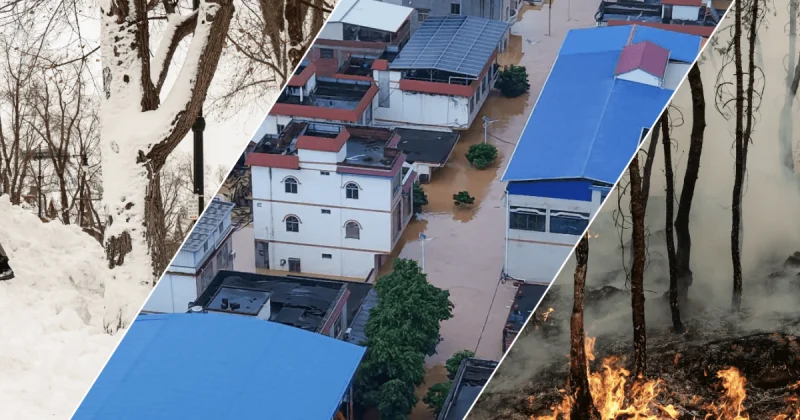
An incoming El Niño is forecast to peak at 4C later this year, a level that would put it among the most extreme on record and, in the words of Bill McGuire, mark one of the biggest upheavals in a millennium. McGuire said the event is being strengthened by the climate crisis, and warned that the world could be heading into a period of severe weather disruption.
The forecast matters now because 4C is well beyond the 2C threshold that defines a super El Niño. The current event is already at 2.7C, and that is why the threat is being watched closely as the year moves toward autumn and early winter. The Met Office has warned of an increased likelihood of a stormy and wet UK season, with the risk of serious flooding and storm damage to trees that have already been weakened by this summer’s extreme drought conditions.
That warning has a hard edge in the recent record. The last big El Niño in 2015–16 brought the most extreme UK floods on record, showing how quickly a warming in the central and eastern equatorial Pacific can be felt far from the Pacific itself. El Niño is part of the El Niño southern oscillation, the climate cycle that shifts between warm El Niño and cool La Niña phases, and the event now building is being monitored for how it might translate into drought in some regions, heavy rain in others and heat elsewhere.

But the link is not neat. There is no straightforward correlation between El Niño strength and the size of the impact in any one place, even though stronger events are widely associated with disruptive and negative weather patterns. That makes forecasts useful but not precise: a powerful El Niño does not guarantee the same outcome everywhere, and the damage can vary sharply from one region to another even as the overall global risk rises.
The economic stakes help explain why this one has drawn such alarm. In 1997–98, a super-El Niño peaked at 2.4C and was linked to losses of $5.7tn. In the great recession of 2008, global GDP fell by around $2tn, and McGuire says the effects of a strong El Niño can suppress economic activity for up to 14 years after the event. Over the last 7,000 years, both El Niños and La Niñas have been steadily increasing in duration, and the article says stronger El Niños are becoming more frequent as CO2 is added to the atmosphere.
For the UK, the immediate question is whether the forecast holds and whether the late-year weather delivers the flood and wind damage that has been flagged. Beyond that, the bigger issue is whether this event becomes another example of a climate cycle that is still natural in origin but increasingly pushed into more destructive territory by a warming atmosphere. McGuire’s warning is blunt: leaders need to make things better, not worse.