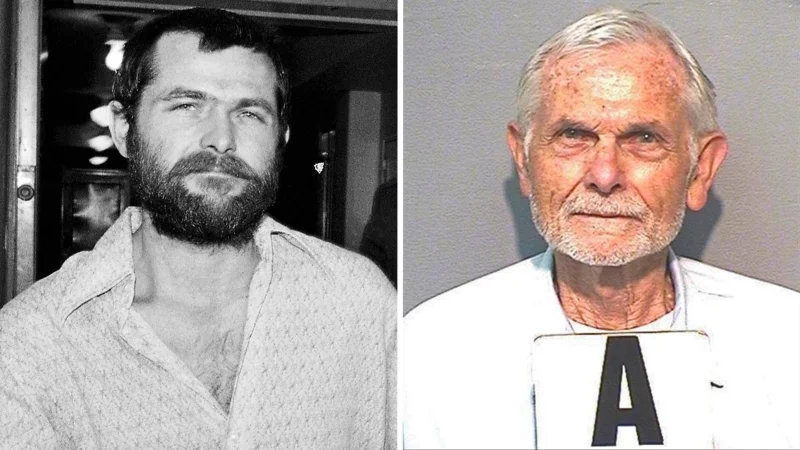
Bruce Davis, Charles Manson’s former follower convicted in two murders, died late last week at age 83 in a California prison hospital. He was pronounced dead at 11:03 p.m. Sept. 11 at the California Medical Facility in Vacaville, and the cause of death was not immediately disclosed.
For people still following the long aftermath of the Manson family case, Davis’s death closes the prison chapter on a figure who spent most of his life behind bars at San Quentin State Prison. He had been sentenced to life in prison in 1972 for the killings of Gary Hinman and Donald “Shorty” Shea, and he remained one of the most watched inmates tied to the case because of how closely he was linked to Charles Manson.
Hinman was an aspiring musician, and prosecutors said he was targeted because he was viewed as a possible help in the cult’s planned move from Los Angeles to the desert. Davis held Hinman at gunpoint while Manson slashed him from ear to chin. Shea, a stuntman who also worked at Spahn Ranch in Chatsworth, was attacked after Manson told followers he was a police informant and trying to push them off the ranch.

Davis admitted to cutting Shea, and Steve Grogan and Charles “Tex” Watson joined Manson and Davis in taking Shea to a secluded area and stabbing him multiple times. He was not involved in the killings of Sharon Tate and four others in Benedict Canyon, but his role in the Manson family kept him at the center of later parole fights.
That fight turned on a contradiction that followed him for years: Davis had been found suitable for parole eight different times since 2010, yet California governors kept blocking his release. Arnold Schwarzenegger, Jerry Brown and Gavin Newsom all rejected him at various points, and Newsom denied release in 2021, writing that Davis had continued to minimize his role and lacked empathy for his victims. Newsom also said Davis “does not understand that it was his agreement to participate in Mr. Manson’s plans that resulted in the torture and murder of his victims, regardless of whether he ultimately inflicted the fatal blows,” and that his conduct “may make him vulnerable to repeating these patterns in the future.”
His last parole hearing in 2024 was delayed after members confronted him over a podcast appearance on The Lighter Side of Serial Killers and over plans to write a memoir and speak publicly about the case. Parole Board Commissioner Julie Garland said his effort to discuss his story would bring “notoriety and glorification” to the Manson family, and added, “And I will tell you, when I heard that you were on this podcast, I was like, ‘What the heck? What is he thinking?’”
That leaves one unanswered detail in a case that has outlived most of the people around it: what, exactly, ended Davis’s life. For now, the prison system has said only that he died and that the cause was not immediately disclosed.