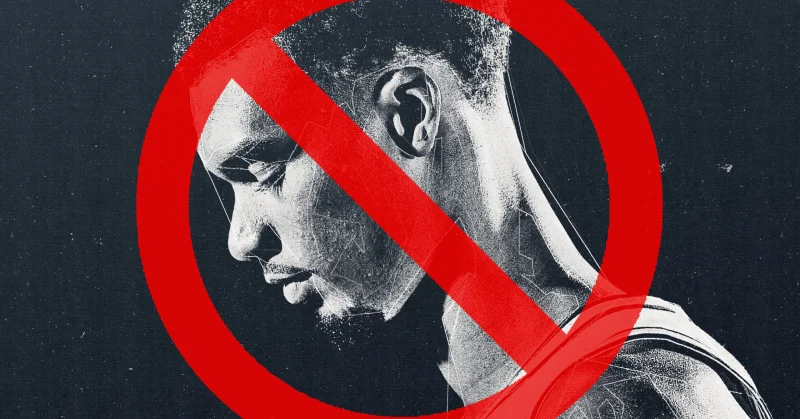
Victor Wembanyama turned Wednesday night into a warning shot for the rest of the Nba, piling up career highs of 52 points and 24 rebounds with eight blocks as the San Antonio Spurs beat the Dallas Mavericks. The Mavericks had already climbed back from a 19-point deficit before Wembanyama took over again.
He is 22 years old, which makes the performance feel even more unsettling for everyone trying to place it in historical context. The NBA has seen this before, when one player’s size and skill pushed the league toward rule changes, but not often at this level and not this early in a career.

That is why the game immediately invites the old comparisons. In 1951, the NBA doubled the width of the foul lane from 6 feet to 12 feet to reduce George Mikan’s advantage. In 1964, it widened the lane again, from 12 feet to 16 feet, principally in response to Wilt Chamberlain. The NCAA went further in 1967, banning the slam dunk for a decade, largely because Lew Alcindor was overwhelming opponents. Wembanyama’s line lands in that same uncomfortable territory: a player so different that the sport starts debating whether the rules, not the game, are out of step.
Wembanyama did not sound like someone interested in a manifesto after the final buzzer. He said he wished he had set better screens toward the end and made more free throws. That modest self-critique matters because it cuts against the larger spectacle around him. Even after a night that looked almost impossible to defend, he framed the game as one with room for improvement, which is exactly what makes the wider debate so hard to settle. If a 22-year-old can produce 52 points, 24 rebounds and eight blocks while still seeing missed details, the next question is not whether the Nba should admire him. It is whether the league will ever decide it has to change around him.