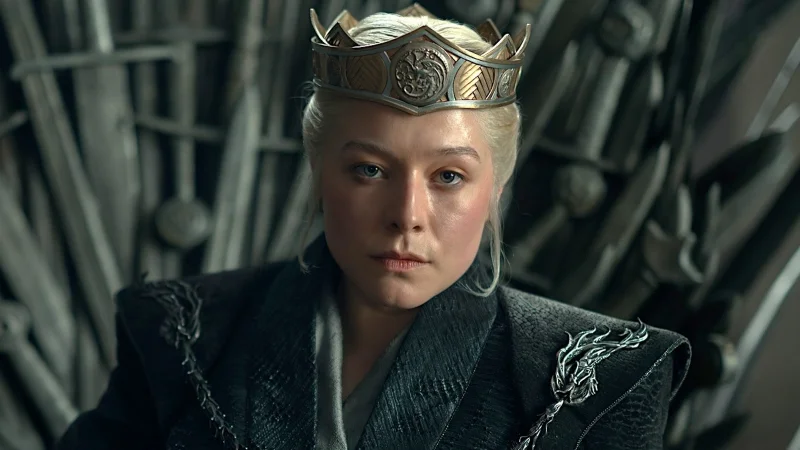
House of the Dragon has done what Game of Thrones did not: it let Rhaenyra Targaryen’s slide into paranoia, cruelty and madness unfold step by step. By the end of season 3, she is no longer just a ruler under pressure. She is disconnected, maniacal and dangerous, after Jace’s death and after taking King's Landing.
That is why the series is being watched now. Rhaenyra is Daenerys Targaryen’s six-times great-grandmother, and the comparison is impossible to miss. In Game of Thrones, Daenerys burned King's Landing and its people to defeat Cersei, but her end came fast enough that it still felt abrupt to many viewers. House of the Dragon, set about two centuries before George R.R. Martin’s central story, is using more room to show a collapse that takes shape instead of arriving all at once.

In season 3, the path to that point was not hidden in a single twist. Rhaenyra almost giddily anticipated victory, then Jace died tragically, then she took King's Landing. Those events do the work of a long decline. They make her shift easier to track, and they explain why the change feels earned even as it darkens her into something closer to the mad queen figure that has followed Targaryens through Westeros history.
But the same clarity that makes her fall believable also sharpens the resemblance. House of the Dragon is not dodging the shadow of Game of Thrones; it is walking straight through it. The show is giving Rhaenyra time to become paranoid, disconnected and cruel in a way Daenerys never got on screen, while also reminding viewers that the endpoint is still tyranny and fire. That balance is the point, and it is what keeps the story from feeling like a simple correction.
Season 4 now has the space to show what those changes mean. The question is no longer whether Rhaenyra will crack, because season 3 has already answered that. The real story is how far she goes once the crown and the damage are both hers.