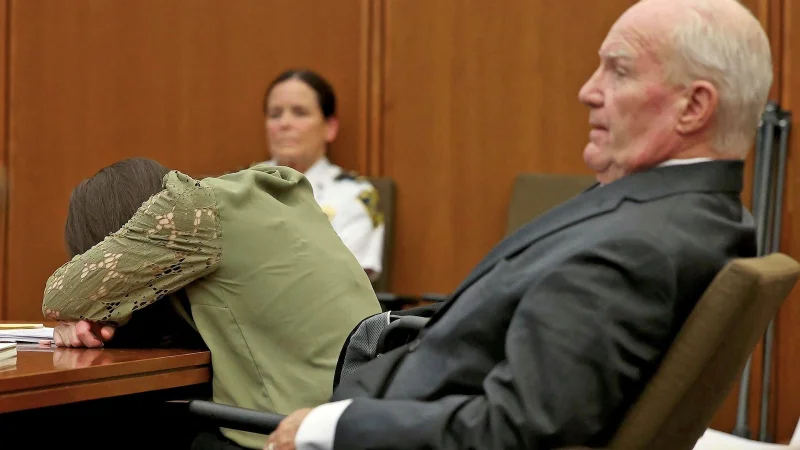
Testimony in the murder trial of Lindsay Clancy was interrupted multiple times on Wednesday as she audibly sobbed while doctors described the autopsies of her deceased children. Judge William Sullivan excused the jury at points during testimony from Renee Stonebridge and Barbara Olson, then told jurors they had to separate any emotional reaction from the informational value and weight of the evidence.
Clancy was hunched over the defense table with a box of tissues nearby for much of the testimony, and she began crying as Olson described Cora's injuries. A few minutes later, during a recess, she was removed from the courtroom in her wheelchair. The scene put the question of who is Lindsay Clancy back at the center of a trial that has already drawn close attention because she has pleaded not guilty to three murder charges tied to the deaths of her 5-year-old daughter Cora, her 3-year-old son Dawson and her infant son Callan.

Wednesday's testimony was not limited to the autopsies. Jurors heard from six witnesses, including the two doctors who conducted the autopsies, three law enforcement officers and therapist Latiesha Dukes, who treated Clancy in the weeks before she killed her children. Stonebridge and Olson described the injuries to Cora and Dawson, but the courtroom was given emotion before detail, and detail before any final legal conclusion. That matters because the doctors' testimony is one of the few places where the case's central facts are being laid out in plain view, instead of through argument.
But the medical evidence is moving through a defense that says something very different was happening inside Clancy's mind. Kevin Reddington has argued that she had postpartum psychosis and severe mental illness, and that she attempted to take her own life after strangling her children. Dukes, however, testified that while Clancy expressed concerns about being addicted to benzodiazepines, she did not show obvious signs of mania or psychosis. She also said she was unaware of some of Clancy's struggles finding treatment for postpartum depression, a gap that keeps the fight over the medical record alive even as the trial moves forward.
The next turn in the case is less about a calendar than about what the jury is left with after the emotion clears. Sullivan has already warned them to measure the evidence, not the reaction it provokes. What remains unanswered is how much weight they will give the autopsy testimony once the courtroom has settled and the defense gets its chance to press its own account of what happened inside the home in Duxbury.