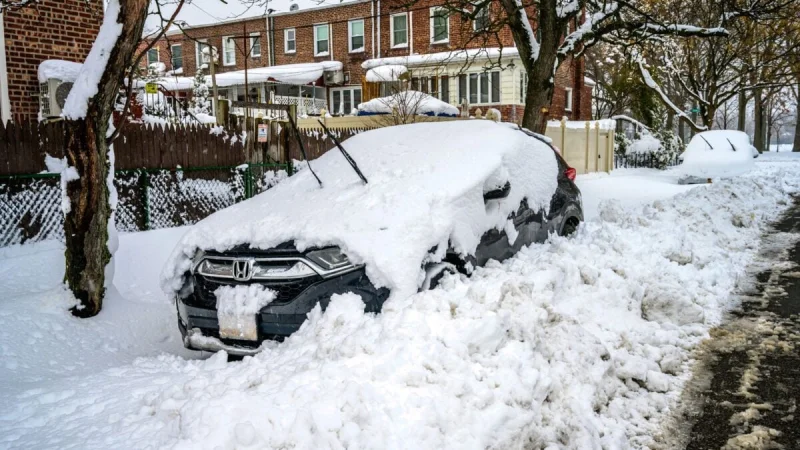
The Old Farmer’s Almanac and the Farmers’ Almanac have published competing 2026-27 winter forecasts, and their biggest split is over whether the Southern U.S. will turn warmer and drier or wet and stormy. Both outlooks still point to a winter that brings mild stretches, then snaps back with cold, snow and storms.
That makes the forecast worth watching now, because readers scanning a weather map want to know which regions may be hit first and hardest. Carol Connare said, “While much of the country is headed for a milder season, some areas will still see plenty of cold and snow,” a line that fits both forecasts even as they diverge on the details. The Old Farmer’s Almanac is looking for above-normal snowfall in central New England, the Appalachians and parts of the West, while the Farmers’ Almanac says the northern Plains, Upper Midwest and Great Lakes could still get sudden snow squalls even when temperatures run near normal.

The disagreement becomes sharper farther south. The Old Farmer’s Almanac expects warmer and drier conditions across Texas, Oklahoma and the Deep South, and a mild winter in Florida, with precipitation varying between the northern and southern parts of the state. The Farmers’ Almanac sees almost the opposite pattern in the southern tier, calling for a wet and stormy stretch from Southern California through Texas, the Gulf Coast and Southeast. That version of winter would also bring a more active southern storm track, which is the setup for repeated systems pushing moisture north and spreading snow and bitter cold behind them.
Both forecasts agree that winter will not be uniform. The Old Farmer’s Almanac highlights wetter conditions and above-normal snowfall in the Pacific Northwest, with the heaviest snow expected in late December, mid-January and mid-February, and it also points to mountain snow in the Intermountain West. The Farmers’ Almanac, by contrast, calls the Pacific Northwest season changeable and somewhat less dependable, while still favoring mountain snow in the southern Rockies. In the Upper Midwest and Great Lakes, the Old Farmer’s Almanac sees temperatures generally above normal despite occasional sharp freezes, while the Farmers’ Almanac puts those areas closer to normal with snow squalls and bursts of bitter cold.
What matters most is not which almanac sounds harsher, but that neither one sees a smooth winter. The forecasts leave the same basic message for travelers, shippers and anyone planning around storms: some regions will get a milder pattern, but the cold and snow will still land in the places that can least ignore it.