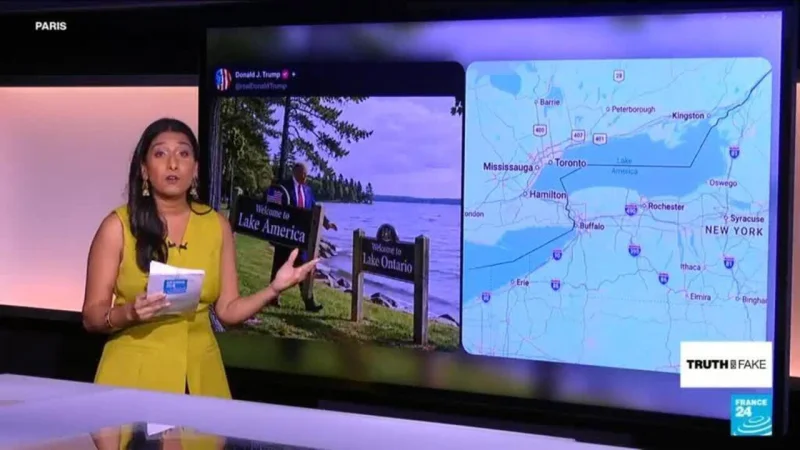
Google Maps is now showing Lake America for users in the United States, marking the clearest sign yet that Donald Trump’s push to rename Lake Ontario has reached everyday map searches. In Canada, the same map still shows Lake Ontario, while users elsewhere can see both names.
The shift matters because it is already live, not theoretical. Apple Maps and MapQuest still use Lake Ontario, and MapQuest publicly rejected the change, saying it will not rename the lake even as Google moved ahead. That split has turned a naming fight into something people can see on their phones in real time.
Google said it made the change to align with the US government’s Geographic Names Information System, which has officially adopted Lake America. The company used the same approach last year when Donald Trump ordered the Gulf of Mexico renamed the Gulf of America: Google switched to Gulf of America for US users while keeping Gulf of Mexico elsewhere. This time, the result is a map that changes with where the user is standing, or at least where the service thinks the user is.
Trump has been promoting the new name on social media, including AI-generated images mocking Canada and celebrating Lake America. One showed Canada geese with Trump-style blond hair appearing to defend the lake. Another showed him replacing a Lake Ontario sign with one bearing his preferred name. Doug Ford responded by putting up a large sign overlooking the lake’s shores that reads Lake Ontario now and always in both English and French.
That is the friction in the story: the change is real inside Google Maps, but it is far from universal. MapQuest’s refusal to follow Google, and Apple Maps’ decision to stay with Lake Ontario, leaves the renaming uneven and unsettled. Ford’s sign may have been meant as a rebuttal, but the bigger answer is still unclear: whether Apple eventually follows Google’s lead, or whether Lake Ontario remains the default name outside the United States while the United States settles on Lake America.