Pope Francis met Ahmad Al-Tayyeb in Abu Dhabi on February 4, 2019, and the two men signed The Document on Human Fraternity for World Peace and Living Together. What looked like a ceremonial encounter was also the point at which Francis tied his own papacy to a larger argument about faith, peace and common dignity.
That is why Abu Dhabi still matters for readers looking at Francis’ later writing. He called the document a reflection born of dialogue and common commitment, and he later used that meeting as the inspiration for Fratelli Tutti. In his telling, God has created all human beings equal in rights, duties and dignity, and called them to live together as brothers and sisters.

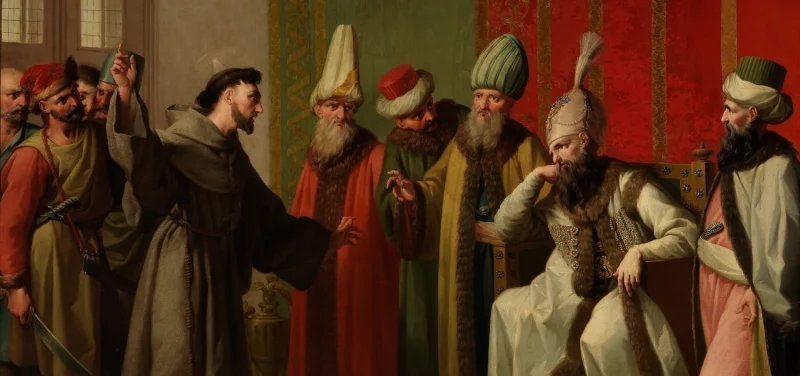
The meeting was carefully planned and linked directly to St. Francis. In 2019, the year marked the eight-hundredth anniversary of the meeting of St. Francis and Malik al-Kamil, the Vatican set the two encounters side by side: one in the thirteenth century in Egypt, the other in Abu Dhabi centuries later. Francis has leaned into that line of continuity before. He was the first pope to choose the name Francis, and he has already titled two encyclicals, Laudato Si’ and Fratelli Tutti, after Italian sayings of St. Francis.
But the familiar image behind the comparison is not as tidy as it looks. The iconic scene of St. Francis embracing Malik al-Kamil may not match the historical record as closely as devotion has long suggested. That does not erase the symbolic force of the comparison; it does change how literally it should be read. The Abu Dhabi meeting was never only about gesture. It was about what Francis thought the gesture meant, and how far he believed dialogue could carry a church trying to speak to the world.
Francis later signed Fratelli Tutti on October 3 in Assisi, on the vigil of the Feast of St. Francis, closing the circle he had opened in Abu Dhabi. The sharper question now is not whether the symbolism mattered. It clearly did. It is how much of the story rests on a powerful image, and how much rests on the harder work of making that image real.