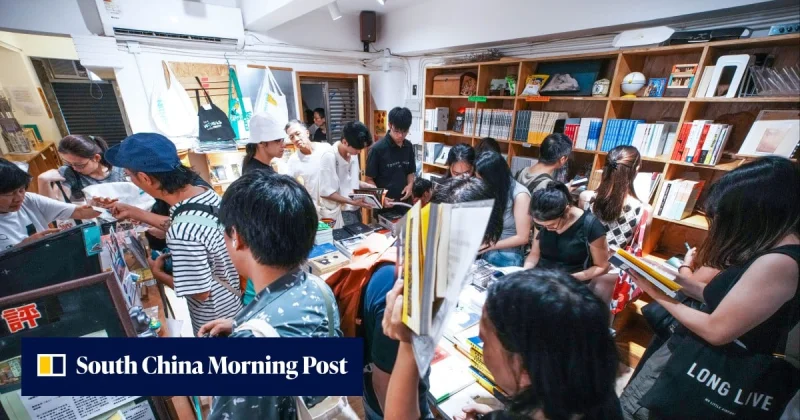
Hong Kong’s independent bookstores are still drawing mainland Chinese readers looking for ideas they cannot easily find at home, even as those same shops face pressure that hangs over every narrow stairwell and upstairs room. On Friday, Aug. 14, 2026, the contradiction was on display across the city: books were visible in Greenfield Bookstore, a staff member opened Hunter Bookstore at noon, and a person waited for the lift leading to shops that included Hong Kong Reader Bookstore.
That pull matters because these bookstores are not easy to stumble into. Many are tucked upstairs in tenement buildings above Hong Kong’s busy streets, and their customers often have to know where to look before they ever reach the door. For some mainland Chinese readers, that search is part of the appeal. The stores function as a refuge and as a window to a freer world, offering access to ideas suppressed at home. In a city better known to many readers for a packed sports calendar, from Chelsea Vs Juventus in Hong Kong as Spalletti's side chase form to Hong Kong Vs Nepal: Bhurtel blasts 126 as Nepal crush Malaysia, these shops remain a quieter test of what can still be found, read and discussed.

Greenfield Bookstore made that point plain on Friday when it displayed books including one titled The CCP’s Plan to Attack Taiwan: A Comprehensive Reveal. The title alone showed why these stores draw scrutiny as well as readers. They are selling material that would be harder to encounter in other places, and they are doing it in plain sight, behind a narrow street entrance under bamboo scaffolding. Elmbook, another independent bookstore, has been part of that same landscape since it opened in 1997, a reminder that this has never been a short-lived niche.
What makes the story harder to resolve is that the bookstores’ appeal and their vulnerability come from the same place. They are useful precisely because they offer access to suppressed ideas, but that makes them sensitive, exposed and easy to pressure. The source does not spell out the exact threat now hanging over them, and that omission matters. It means the danger is real enough to be part of the daily rhythm of the shops, but still unclear enough to leave readers wondering whether the risk is political, commercial or something quieter and more immediate.
For now, the most important fact is that the bookstores are still open, still upstairs and still being sought out by readers who want what they cannot get elsewhere. The next question is not whether the demand exists — it plainly does — but how long Hong Kong’s independent bookstores can keep serving it before the pressure around them starts to win.