The Old Farmer's Almanac has released its winter forecast for the coming season, and it points to a mild, near-normal winter for much of the United States. But the spread is uneven: parts of the Northeast and Appalachians, along with parts of the West and Alaska, are in line for snowier-than-normal conditions, while other regions could see wetter or drier weather.
The print edition carrying the forecast becomes available Tuesday, Sept. 1, making the almanac's read on winter a fresh subject just as readers start looking ahead. That timing matters because the forecast is already being weighed against other seasonal outlooks, even though meteorologists generally pay little attention to annual predictions from almanacs.
The Almanac's full winter outlook calls for wetter-than-normal conditions across much of the West and in parts of the South, Midwest and Florida. A drier winter is forecast for parts of the East, Plains and Southwest. The National Weather Service Climate Prediction Center's December 2026-February 2027 outlook, meanwhile, calls for above-normal to near-normal temperatures across much of the United States and normal or below normal precipitation across much of the northern U.S., with above-average precipitation forecast for much of the Southwest, Central, South, Mid-Atlantic and Northeast.

Don Day said earlier in August that he did not think detailed winter forecasting should be discussed until mid to late September. He was blunt about the uncertainty around the almanac-style approach, saying, “I don't know what voodoo magic they use to get their forecasts,” and adding, “I don't think we should be talking about any detailed winter forecast till maybe mid to late September. Until then, it’s not helpful for anybody.”
That skepticism lands against a forecast the Almanac says is built on a secret formula devised in 1792 by founder Robert B. Thomas and later updated with state-of-the-art technology and modern scientific calculations. The publication says it has an average accuracy of 80% on temperatures and precipitation, a claim that stands apart from the way most meteorologists treat long-range almanac predictions.
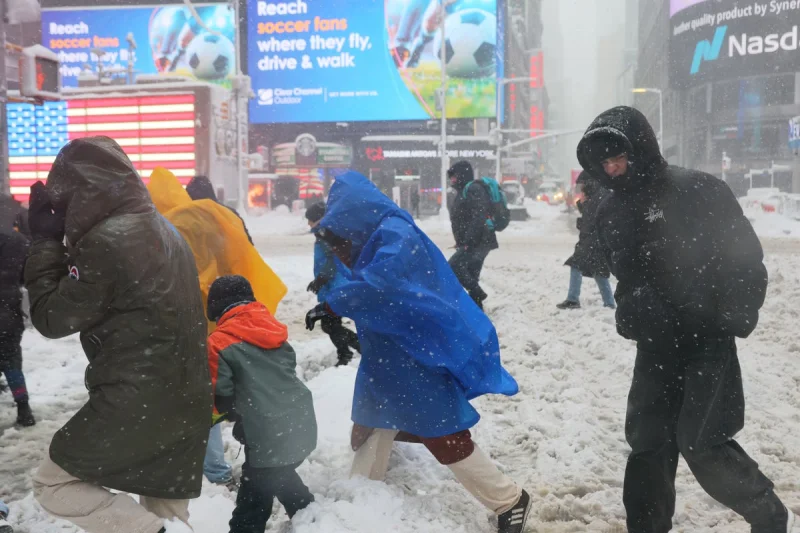
The new outlook also arrives after last winter's extreme conditions, when a polar vortex and a massive winter storm in January battered more than 30 states and claimed more than 120 lives. The Carolinas were hit with blizzard conditions, even Florida got snow, and a March megastorm brought blizzard conditions to the Great Lakes, high winds and thunderstorms to the East and a heatwave to the West.
For now, the question is not whether winter will be busy somewhere in the United States. It is which of these competing outlooks will come closest when the season arrives, and whether the almanac's regional split holds up once snow and cold start to take shape.