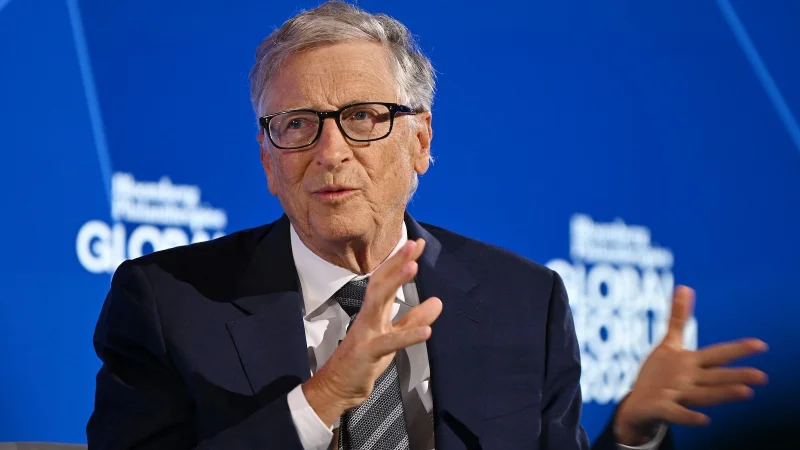
Bill Gates used a nearly 6,000-word essay posted Wednesday to warn that AI is pushing the world toward what he called the “most turbulent time in human history.” The 70-year-old Microsoft co-founder said the technology is advancing at a mind-blowing rate and could soon be better than people at many tasks.
He did not frame that as a distant worry. Gates said AI can replace and exceed human cognition for the first time, and that means massive unemployment and economic turmoil if leaders in the U.S. and abroad do not move faster on the risks that come with it. He also warned that if AI falls into criminal hands, the damage could be severe.
That warning lands now because Gates is not speaking as a casual critic. He helped pioneer the personal computer revolution, and he is casting AI as a different kind of break from the past. The PC era took 20 years to reshape how people worked with computers; Gates says AI is moving far faster than that and that there is no plan to ease the entry into the AI era.

In the essay, Gates described AI as a tool that could become the “greatest equalizer ever invented, or the worst source of injustice.” That split depends, he argued, on whether leaders, experts and communities start confronting the problem with more urgency. He said there is a credible case for slowing AI advances globally if it could be done in a coordinated way, but added that he does not think that will happen because the geopolitical and economic incentives are pushing too hard toward full speed ahead.
That is the friction at the center of his warning. Gates is effectively asking for restraint from an industry and a policy world that is still racing to build, fund and deploy AI systems at scale. In private, he said, even people who understand how fast the technology is improving are worried, yet they keep pressure low because so much money is at stake.
Gates is the latest major figure to press for guardrails, joining calls in June from Dario Amodei for stronger regulation and for government to be able, in narrow cases, to block unsafe deployments. He also warned in an interview published Wednesday that tech executives are downplaying the threats. What he wants next is still broad rather than specific: a real plan, not just more optimism, before AI’s speed outruns the public’s ability to absorb the consequences.