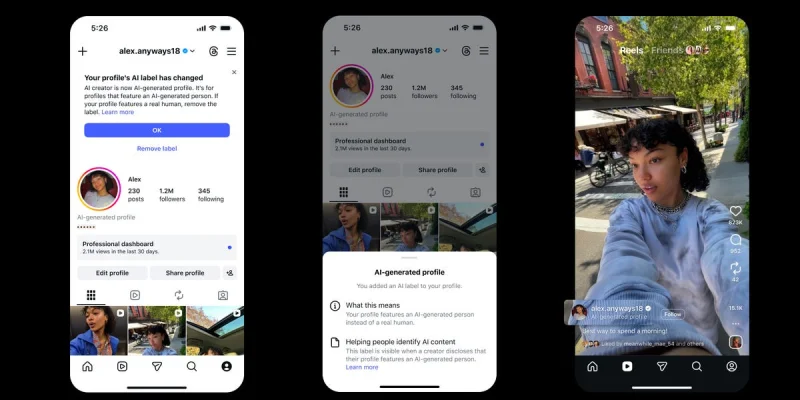
Instagram said on Monday it will change how it labels AI-generated profiles and begin limiting the reach of accounts that feature AI-generated people without saying so. The platform is also renaming its existing AI creator label to AI-generated profile.
The shift lands at a moment when people are searching for a cleaner answer to a messy question: when does an online identity stop being a creative experiment and start looking like a real person? Instagram said the new label is meant to make disclosure easier to understand, and to tell users that the person featured on a profile was generated or substantially created with AI.
That distinction matters because Instagram is not treating every use of AI the same way. People who use AI to edit photos, polish captions, create graphics, or make other creative tweaks do not need the AI-generated profile label. Creators who use the new label will not be penalized simply for having an AI-generated person as their profile subject.

The penalty comes when a profile presents an AI-generated person without disclosure. In that case, Instagram said reach can be reduced, a direct signal that the platform is trying to make hidden synthetic identities less visible without banning them outright. The company did not spell out exactly how it will decide whether a profile was generated or substantially created with AI, or how often the limits will be applied.
Instagram said the change is partly a response to users who found profiles that looked like they belonged to real people and later learned the person was completely AI-generated. It is also part of growing frustration over AI-generated content on social media, after earlier complaints over an AI tool that let users generate images using other people’s likenesses. That pressure has been building around the broader ecosystem, from a Wired investigation into Goose that found more than two dozen accounts that appeared to feature AI influencers to reporting in July that it found hundreds of AI-generated doctors, healers, and wellness personalities promoting supplements or making health claims.
The question now is not whether Instagram wants more disclosure. It does. The unanswered part is how far it will go in policing the accounts that try to pass AI-made people off as real, and whether reduced reach will be enough to change behavior before the platform has to draw a harder line.