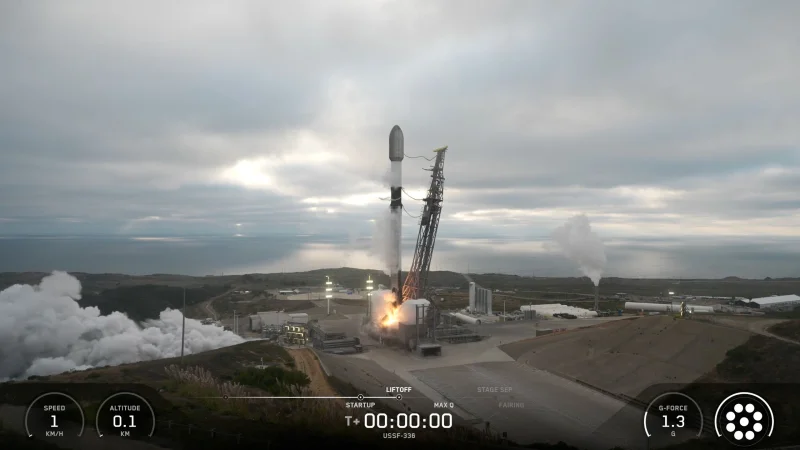
SpaceX launched two Falcon 9 rockets on Saturday night, and the gap between them became the story: 38.5 minutes. The first lifted off from Cape Canaveral Space Force Station at 9:12 p.m. EDT carrying eight Globalstar satellites, and the second rose from Vandenberg Space Force Base in California with the classified USSF-366 payload for the United States Space Force.
For readers searching SpaceX Falcon 9 rocket launch because of the timing, this was the kind of doubleheader that turns routine cadence into a record. The first flight marked the 52nd orbital launch from Florida’s Space Coast this year, while the second came from the West Coast just 38.5 minutes later, showing how quickly SpaceX can reset one mission and push another toward orbit on the same night.
The first booster, B1090, was on its 14th flight and came back to Landing Zone 40 about eight minutes after liftoff. The second booster, B1088, landed on the droneship Of Course I Still Love You in the Pacific Ocean, giving SpaceX its 650th Falcon booster landing to date. Those recoveries framed the launches as more than a fast pair of takeoffs; they showed the company stretching reuse and turnaround at the same time.

Globalstar’s side of the story had already been building for months. It publicly announced the Globalstar 2-R Launch 1 Mission in the springtime, then said on May 12 that replenishing its existing constellation remained critical to delivering resilient satellite services around the world. The company had previously aimed for Sunday, May 17, before pulling the schedule to allow more time for teams to prepare the satellites for launch.
That delay sits beside the pace SpaceX set on Saturday night. Globalstar said the mission was an important step in sustaining and strengthening the infrastructure its customers rely on every day, but it also needed extra time while SpaceX was already moving through a record-paced launch sequence. The contrast made the mission feel less like a tidy schedule and more like a reminder that even fast launch systems still depend on patient preparation on the payload side.
The Space Force mission was no less opaque. A Space Systems Command spokesperson said USSF-366 was assigned under a previously awarded National Security Space Launch Phase 3 Lane 1 task order, but the payload itself was not disclosed before liftoff. That leaves the most basic question unanswered: not when SpaceX can launch again, but what exactly the second rocket was carrying for the U.S. Space Force.