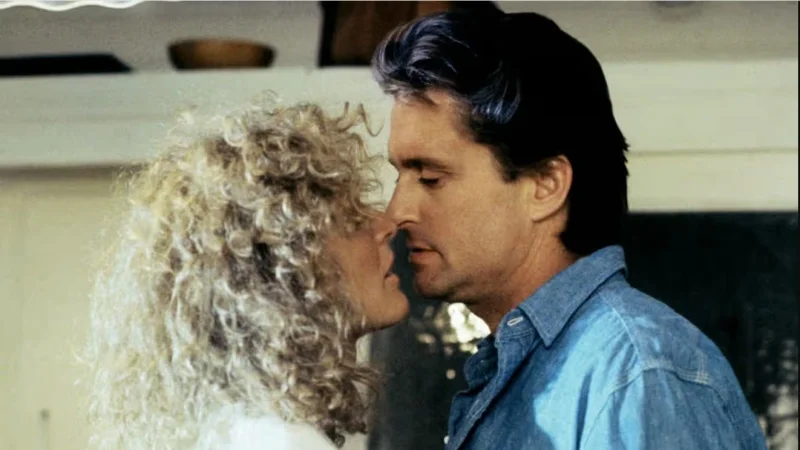
Adrian Lyne says Fatal Attraction kept a blink-and-you-miss-it frame showing Michael Douglas' private parts, and he says the thriller's ending was altered at the last minute before the film became one of the era's defining hits. Speaking at a screening on Thursday night, Lyne also returned to the movie that made Glenn Close's Alex Forrest one of the most debated characters in modern film.
The timing matters because Fatal Attraction still draws attention decades after it became a benchmark for movie thrillers and picked up six Oscar nods from the Motion Picture Academy. Those nods included Best Picture, Best Director for Adrian Lyne, Best Actress for Close, Best Supporting Actress for Anne Archer and Best Adapted Screenplay, a haul that helped turn a commercial sensation into a lasting cultural reference point.
Lyne did not dress up the moment. He said, in so many words, that there is “one frame” with Douglas' private parts visible as Dan Gallagher struggles to get his pants off in the love scene with Close, and that the shot stayed in because it flashes by so fast. He also said he chose the sink for the kitchen sex scene because it felt more interesting than a bed, and because the clanking crockery and cramped setup gave the scene a different kind of charge.

The screening also brought a detail that could only have come from someone in the room. Ellen Mirojnick called out from the audience that Close wore only the black leather jacket “with nothing underneath it,” which fit the film's deliberate push-pull between danger and seduction. Lyne said Close found multiple ways to deliver the line “Yes, I'm discreet,” and he said her smile after the knife fight helped shape the movie's seductive ambiguity.
He also pushed back on the reading that has followed the film for years. Lyne said the idea that Fatal Attraction was an attack on career women was “just nuts,” arguing that it was a story about one woman, not a broad statement about women at work. He added that he sympathizes with Alex Forrest for at least three-quarters of the movie, which leaves the film in the same uneasy place it has occupied since the 1980s: admired, argued over and impossible to reduce to a single message.
That is why the unanswered part still matters. Lyne said the ending changed late, and he said that switch helped save the movie, but he did not spell out in detail what the original ending was before the change. What he did make clear is that the film's power came from decisions made quickly and kept barely visible, from a hidden frame to a last-minute ending that still has people talking.