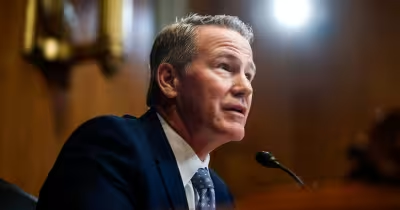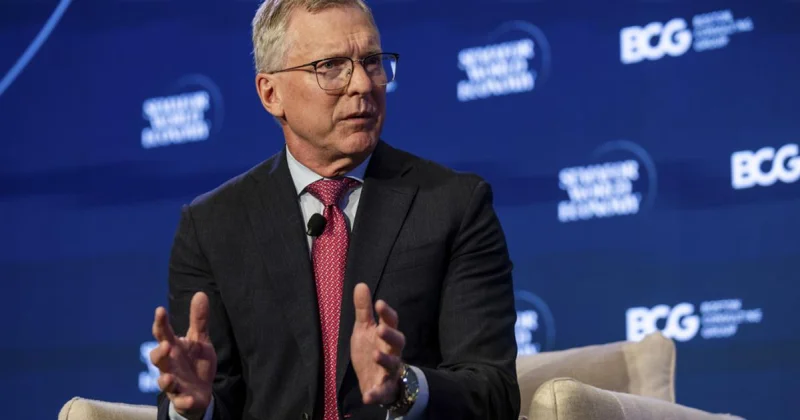
Phillips 66 and Marathon Petroleum held merger talks earlier this year that could have created a $180 billion oil-and-gas giant, but the discussions have now fizzled out. The deal is unlikely to be revived anytime soon.
The size alone explains why the talks drew attention. Phillips 66 and Marathon Petroleum together account for roughly a quarter of US refining capacity, a share that would have put the combined company under a sharp antitrust microscope in a market with only a handful of standalone refiners.
That scrutiny mattered because the merger would not have been a modest reshuffle. It would have joined two of the country’s biggest refiners into a single business with enough scale to change how the sector is priced and negotiated, even before the rest of the oil-and-gas portfolio was considered.

The talks also ran into a broader reality in Washington. Administration officials have waved through a number of big mergers in other industries, including a $110 billion deal at Warner Bros. Discovery and a $14 billion deal at Juniper Networks, but that does not remove the competition questions that would come with combining two refiners that already control such a large slice of the US market.
There were also practical complications inside the two companies themselves. Phillips 66 has a chemicals joint venture with Chevron, and each side has a right of first refusal to acquire the venture outright. Marathon Petroleum has MPLX, a publicly traded but controlled subsidiary, and that structure would have added another layer of complexity to any combination.
What the collapse leaves behind is a clear signal: for all the talk of scale in the petroleum business, this was a deal that could get as far as discussion and still run into legal, regulatory and structural walls before it reached the finish line. For now, the market’s big question is not whether the merger made strategic sense, but why talks that large never made it past the point where they could become real.