Senate Democrats blocked the Ratepayer Protection Act on Wednesday, stopping a bill that would have set a federal standard aimed at shielding consumers from higher utility bills when new data centers are built in their communities. The measure fell 57-43, leaving it short of the 60 votes needed to break a filibuster and move forward in the United States Senate.
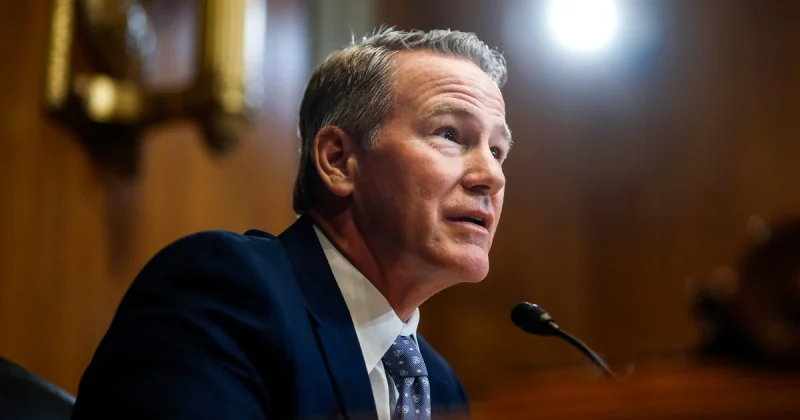
The bill’s sponsor, Jon Husted, is trying to turn the issue into a winning argument as he seeks his first full Senate term in Ohio. Husted said Tuesday that Democrats could let the measure pass and claim a bipartisan win, arguing that if they wanted lower electricity prices, they should simply stop blocking it. His push comes as Sherrod Brown has attacked him as the face of data centers, pointing to Husted’s backing for new development when he was lieutenant governor.

The House passed the same measure 417-3 two weeks earlier, and that wide margin became a central part of the fight in the Senate. Under the bill, state public utility commissions would be told to look for ways to make developers of data centers cover their own water and electricity costs instead of passing those expenses on to consumers. That is the core of the fight: who pays when a data center comes to town, the company building it or the people already living there.
Chuck Schumer dismissed the proposal as an optional bill for states and called it a fraud, saying it does not require any protections at all. He also labeled it a toothless messaging bill, even as Republicans argued the House vote showed the measure was consequential and could still become law if the Senate let it advance. John Thune said nearly every House Democrat voted for it, while Thom Tillis backed Husted’s effort and said the issue is best handled through public utility commissions and state and local decision-making, as in North Carolina.
The clash leaves the issue where it has been headed for weeks: popular enough to win overwhelming House support, but not strong enough to clear the Senate’s 60-vote barrier without Democrats joining in. With consumers in places facing new data center construction watching the costs closely, the next move belongs to Senate Republicans, who will have to decide whether to try again with the same bill or shift to another approach.