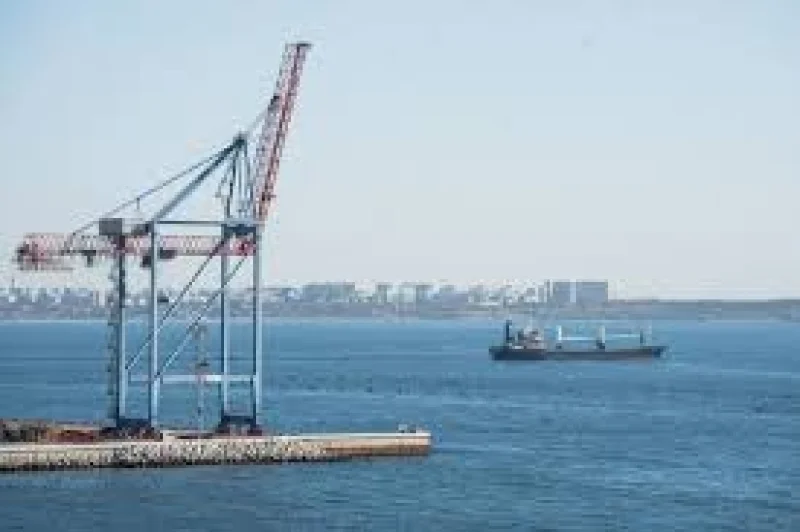
Hundreds of Ukrainian drones struck Novorossiysk, Anapa, Gelendzhik and the Temryuk region overnight, according to Krasnodar region Gov. Veniamin Kondratyev. The attacks spread across several places at once, making it clear this was no isolated raid.
Kondratyev said the drones hit Novorossiysk, Anapa, Gelendzhik and the Temryuk region, but he did not give damage totals or say how many were intercepted. That missing detail matters because the scale is known only in broad terms: hundreds of drones were involved, yet the impact on each location remains unclear.

The strikes landed on the same day that a Russian overnight attack hit a shopping mall in Zaporizhzhia and another Russian attack set off a fire in an apartment on the fifth floor of a multi-story residential building in Odesa. The back-and-forth timing underlines how the fighting is moving in both directions at once, with one side hitting the Krasnodar region while the other suffers damage in Ukraine.
Russian President Vladimir Putin also visited the Varyag missile cruiser of the Pacific Fleet on Wednesday, Aug. 12, 2026, to watch a military exercise near Yuzhno-Sakhalinsk on Sakhalin Island, Russia, and later attended a meeting with navy officers there alongside Pacific Fleet Commander-in-Chief Admiral Viktor Liina. That separate appearance does not answer what the overnight drone wave achieved, but it shows the Kremlin projecting military activity even as the cross-border attacks continue. The immediate question now is whether the Krasnodar region can absorb repeated drone pressure without revealing where the strikes landed hardest.
Volodymyr Zelenskyy has argued in a recent Guardian interview that Ukraine sees a momentum shift, and the overnight attacks fit the broader pattern of a war that is still being fought through sudden, simultaneous blows. Kondratyev’s account gives the strongest public sign yet of how widespread the drone wave was, but the true measure of its effect may not be visible until the damage totals and interceptions are fully tallied.