


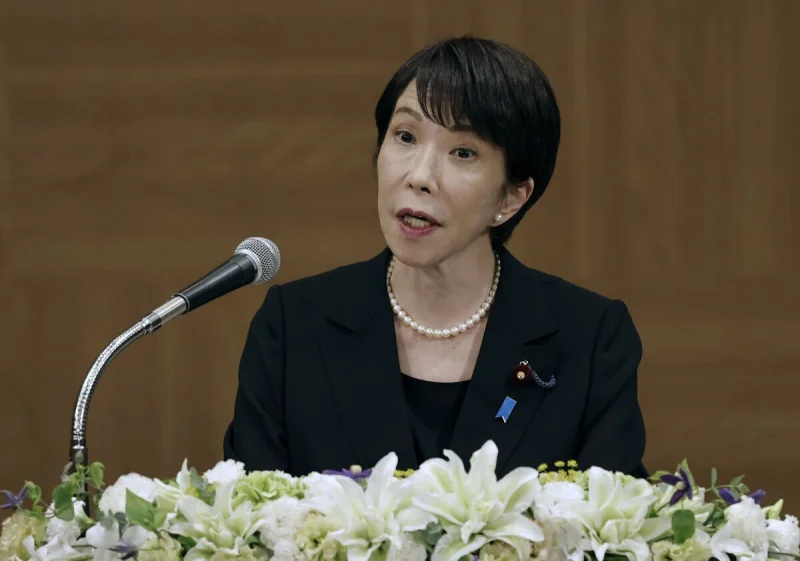
Hiroshima marked the 81st anniversary of the U.S. atomic bombing on Thursday with a ceremony at Hiroshima Peace Memorial Park, where a minute of silence was held as the peace bell rang at the exact time the bomb was dropped. Hiroshima Mayor Kazumi Matsui read a statement, and Japanese Prime Minister Sanae Takaichi delivered her speech as the city remembered the dead and faced the same question it returns to every year: what the memory of that day demands now.
The ceremony began with visitors praying in front of the cenotaph dedicated to the victims of the atomic bombing, a quiet scene that gave way to the formal observance in western Japan. The timing mattered. By marking the anniversary at the same hour a U.S. B-29 dropped the bomb on Aug. 6, 1945, the city linked the present directly to the blast that reshaped Hiroshima and helped define Japan’s postwar identity.

Matsui’s statement put the day’s central concern back at the center of the memorial. He deplored the pursuit of nuclear weapons, keeping the focus not just on the past but on the danger that survivors and city leaders say still hangs over the world. The mayor did not use the occasion only to mourn. He used it to press the case that remembrance without restraint on nuclear arms would miss the point of the ceremony entirely.
That is where the event carried its friction. A peace ceremony is meant to honor the dead, yet the message from Hiroshima was unavoidably political because the anniversary itself is political. The city was not simply counting years; it was measuring how far the world has moved, or failed to move, away from the logic that produced the bombing in the first place.
No change to Japan’s nonnuclear principles was announced during the ceremony, and none was made afterward in the material from the event. So the immediate significance stayed with the words spoken in the park and the silence that followed them. On this anniversary, Hiroshima did what it has long done: it turned a fixed moment in 1945 into a warning aimed at the present.
