


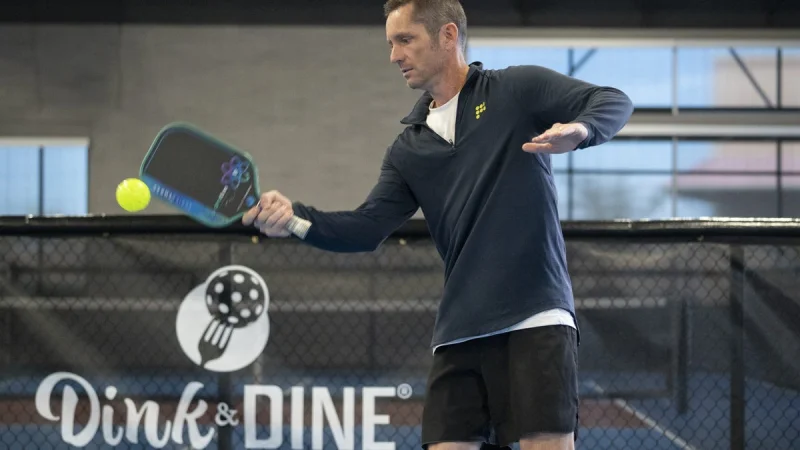
Brett Warner has done something few players can claim: he won national pickleball championships in 2021, 2022, 2023, 2024 and 2025, then kept working to push the sport deeper into Arizona. The Mesa resident is not just collecting trophies. He is helping build the next layer of the game through PURE Pickleball & Padel and school clubs that are turning a fast-growing pastime into something more organized.
That is why Warner is drawing attention now. Pickleball is exploding across Arizona, and his five-title run gives that rise a face. Warner said he has “great friends and training partners here in Arizona,” and he added that the state has “the best pickleball community in the world” whether someone is trying the sport alone for the first time or showing up as part of a family. For a player whose winning streak now stretches across five straight years, the appeal is not only the titles. It is the ecosystem around them.

Warner’s path explains why he speaks about the sport the way he does. He grew up playing tennis at a very young age, became a collegiate athlete at George Washington University and later learned pickleball through a brother who visited his family for the holidays. He said he had “the fortunate run of the true amateur experience,” and that background still shapes the way he talks about the game. Pickleball was created in 1965 on Bainbridge Island, Washington, by Joel Pritchard, Bill Bell and Barney McCallum, but Warner’s version of the sport is rooted in something much more current: schools, clinics and a push to give young players a place to start.
That effort is still being built from the ground up. PURE Pickleball & Padel has helped around 30 different schools across Arizona create pickleball clubs, but that number also shows how early the school-game still is. A state where the sport is growing quickly does not yet have a fully formed pipeline at the high school level, which is why Warner keeps returning to the same point. “Having the option of playing on high school teams and giving kids the chance to play at the next level is the goal at the end of the day,” he said. He also said the pace has been so fast, and the response from players and parents so strong, that the group started PURE academy.
That gap between popularity and structure is the story underneath Warner’s run. Arizona has the energy, the players and now a five-time champion helping lead the charge, but the school side is still catching up. The next stage is not another slogan about growth. It is whether more schools decide to turn clubs into a real ladder for competition, and whether the sport Warner helped popularize can keep moving from the court to the classroom without losing momentum.
