


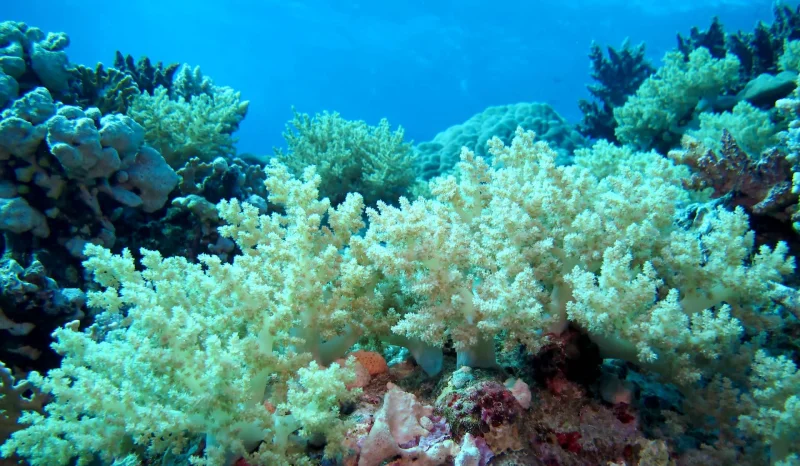
Researchers have confirmed living coral on a reef off Benin that had been treated as little more than an old mystery for decades, overturning the long-held view that the site was barren. What was once judged more than likely devoid of life is now a living deep-water habitat.
The finding matters because it did not come from a quick glance at the seabed. The team scanned 7 miles, or 11 kilometers, of ocean floor with modern sonar, then sent an underwater drone and a Deep Sea Camera System to two locations that looked promising. In the footage, the team saw what appeared to be a healthy coral ecosystem, along with golden African snappers, blackbar soldierfish, Guinean angelfish, West African goatfish, the Monrovia doctorfish, three-banded butterflyfish and two species of damselfish feeding and sheltering among rocky patches.

Gérard Zinzindohoué said the field campaign was hard, with long days at sea, technical problems and a lot of uncertainty before the sonar finally showed structures that looked like reef signatures. When the cameras went down, he said, the team could suddenly see the seafloor, and the first images brought excitement and disbelief. For researchers studying the Gulf of Guinea continental shelf, that shift is the point: a place written off for about 60 years turned out to contain a living coral system instead of a dead seabed.
The reef fits the definition of a mesophotic coral ecosystem, a deeper, dimmer kind of reef that gets less sunlight and usually grows more slowly than shallow coral formations. It is not one continuous barrier reef but several rocky areas that give coral a place to take hold. That may be part of why it survived so long despite being presumed dead: the depth, the scattered rocky structure and the lower light created a hidden environment that old surveys could not fully resolve.
Deep-water coral ecosystems matter for more than the surprise factor. They can provide habitat for fish and other marine life, and they may also preserve records of past ocean conditions. To the team’s knowledge, this is the first confirmed record of a living mesophotic coral ecosystem on the Gulf of Guinea continental shelf, which means there may be more such patches nearby waiting in the same dark water. Scientists believe additional surveys could reveal them, even if no new campaign has been announced yet.
