


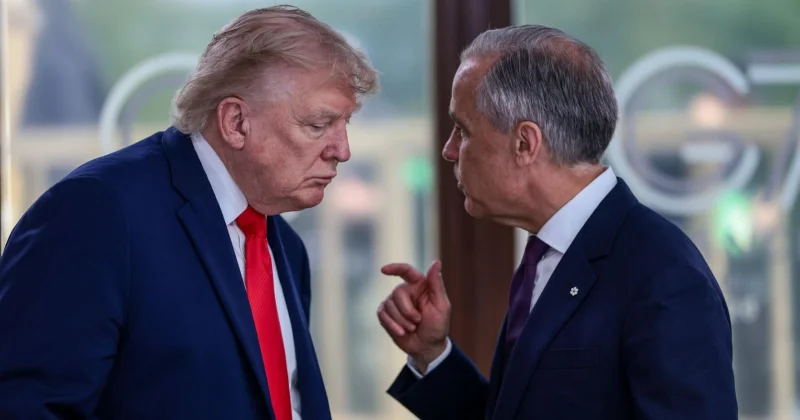
The White House has hit Canada with tariffs as high as 50% on a selection of Canadian products, including items that had been protected by the trade agreement. The move leaves Canada exposed to a sharper blow than the roughly 10% tariffs Donald Trump announced against many other countries, and it lands as a direct challenge to Mark Carney’s promise to confront the pressure from Washington.
That is why the Mark Carney Donald Trump trade dispute is being watched so closely now. Canada’s exports go overwhelmingly to the US, so even a narrower set of goods can cause outsized pain when the rates are this steep. The White House said the tariffs were retaliation for Canadian trade practices, but in Canada they read as something more than a policy dispute: another sign that Trump is willing to use trade as leverage against a country that depends on the relationship more than almost any other.
Carney has remained popular precisely because many Canadians see him as the right leader to deal with Trump. That helped the Liberal party after Trump’s return to the White House upset an election that had once looked lost to the Conservatives. The party dumped Justin Trudeau, replaced him with Carney, wrapped itself in the flag, and won decisively. The political lesson was hard to miss: when Trump presses Canada, voters have tended to rally around the person they think can stare him down.

The tariffs also sit inside a longer break in the relationship. Canada was largely spared the impact of the April 2025 Liberation Day tariffs because of its pre-existing free trade deal with the US and Mexico. Earlier this month, the US declined to extend that deal for another 16-year term, and it is now subject to annual renegotiations. That change matters because it removes the certainty Canada had relied on, and it gives Washington a fresh point of pressure each year instead of once a generation.
There is still a gap between Trump’s words and what he is actually prepared to do. He has said he wanted to annex Canada as a 51st state, but he ruled out military force and said he would use economic force instead. For all the shock in Canada’s political class, there has been little sign that annexation is anything more than typical Trumpian bluster. Even so, the combination of the talk and the tariffs has been enough to unsettle a country that trades so heavily with the US and that still has to live with whatever comes next in the tariff war.
What comes next is not a single dramatic deadline but a grind. With the deal now on annual review, Canada has to face a White House that has already shown it can move fast and hit hard. The open question is not whether Trump can keep turning the screws. It is which parts of Canada’s economy he chooses to squeeze next, and how long Carney can keep that pressure from defining the relationship.
