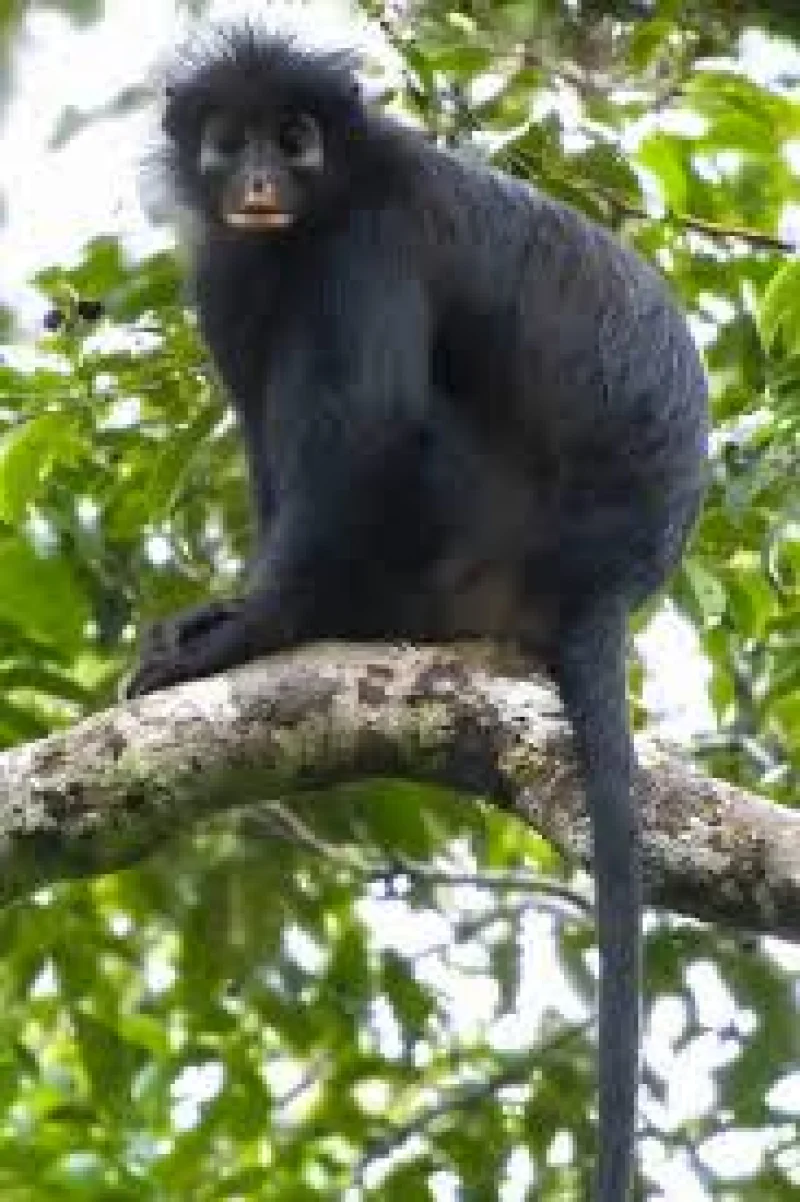
A monkey with pinkish-orange lips and a black face has been confirmed as a new species to science in the forests of the Democratic Republic of Congo. The animal, named Colobus congoensis, was identified after researchers combined audio recordings, photographs and genetic studies from Lomami National Park.
The finding matters because it adds a fifth African monkey species discovered in the last 75 years, a rarity in itself. The black-furred primate was spotted in the high tree canopy of dense tropical forest, where it blends into the leaves and is easy to miss even when it is close by.
The species was published in PLoS One after an international team from the Democratic Republic of Congo, the US and Germany studied the animal following another sighting 10 years after conservationists first reported it in 2008. That first report rested on a single blurry photograph, enough to raise suspicion but not enough to settle the question of what the monkey was.

Prof Kate Detwiler said these are really important African monkeys that do not have thumbs, and that they are herbivores of the canopy with a critical role in the ecosystem. She said they may help with processing seeds and germination in the forest, which makes the species more than a zoological curiosity. It is part of how the forest functions.
Junior Amboko said seeing the animal up close was an amazing feeling. He described the monkey as kind of shy and said, “You often hear them, but don't see them.” That fits the way the species has stayed out of sight for so long, tucked high above the forest floor and known to very few people outside the area.
But the discovery was not wholly new to everyone who lives there. Some local people already knew the monkey as Likweli, even before science put a formal name on it. Researchers interviewed people in 52 villages near the animals’ range, and only people in eight villages had ever seen them, which hints at how restricted and elusive the species is.
The larger concern is what comes after confirmation. The animals are hunted for meat, and the team hopes the formal recognition of Colobus congoensis will help secure official protection for a monkey that appears to be rare, local and still vulnerable to pressure in the forest where it was finally named.