


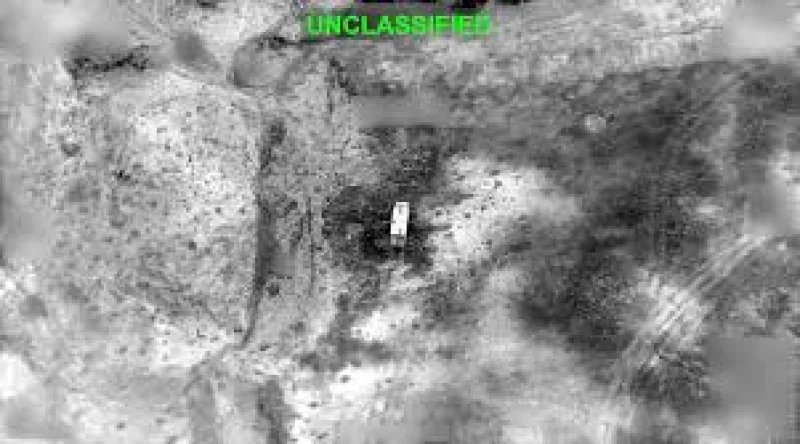
The United States launched a fresh round of strikes on Iranian military targets Wednesday morning and said the aim was to blunt Iran’s ability to attack commercial ships in the Strait of Hormuz. U.S. Central Command said the assault was part of a five-day run of attacks, and the blockade on Iranian ports was enforced again as the shipping lane came under renewed pressure.
That matters now because the Strait of Hormuz is not a distant front line; it is a choke point for commercial vessels, and traffic through it has already been disrupted. Seven vessels crossed on Wednesday, down from 13 the previous day, while U.S. forces redirected two commercial vessels that tried to slip past the blockade after it restarted Tuesday.
The escalation has pushed President Donald Trump’s opening idea aside. He had initially floated a 20% “Reimbursement Fee” in the strait, then backed away and said it would be replaced with trade deals involving the Gulf States. Instead, the response has become military pressure, with global crude oil prices ticking up Monday on news of resumed hostilities and staying near $80 a barrel, up from about $69 a barrel in June.

The U.S. says the strikes are meant to protect mariners; Iran has answered with a public threat of its own. A massive billboard in Tehran, installed at Islamic Revolution Square, shows Donald Trump lying in a coffin and carries the English-language words “We Kill Trump,” a reminder that the confrontation is being fought as much through signals and symbols as through missiles and blockade lines.
U.S. forces have hit Iranian military targets repeatedly this week, and CENTCOM said its evening wave struck command centers, air defense sites, missile and drone capabilities, and coastal surveillance facilities. It also said American forces hit coastal defense and cruise missile sites on Greater Tunb Island during a 90-minute wave, describing the strikes as intended to further degrade Iran’s ability to threaten innocent mariners crewing commercial vessels transiting the Strait of Hormuz.
What remains unresolved is how long the blockade will hold and whether the shipping slowdown turns into a longer interruption. For now, the pattern is clear: each new strike is narrowing Iran’s room to pressure the waterway, and every day the blockade stays in force raises the cost for a route the world cannot easily replace.
