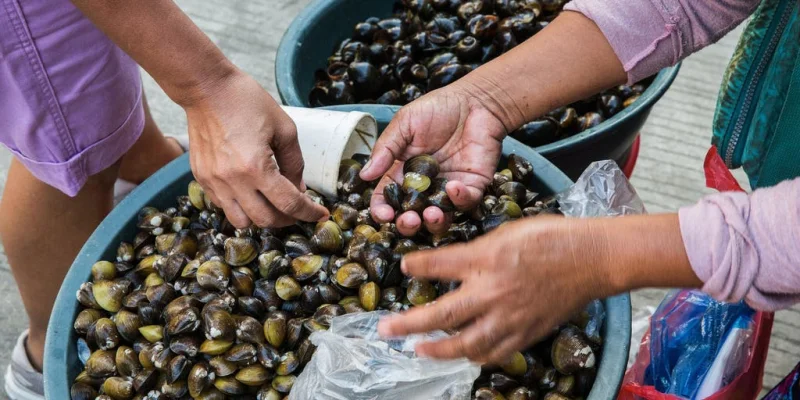
Manila clams have been confirmed along the New England coastline, turning what had been the Northern Hemisphere’s last holdout into the species’ newest foothold. Researchers say the shellfish, also known as Ruditapes philippinarum, are beginning to thrive near Cape Cod and around Provincetown, Massachusetts.
The push to find them started last summer, when Aly Putnam received a photo from El Fernekees Hartshorn showing what looked like a Manila clam shell. Putnam and Carolina Bastidas were leading a biodiversity workshop on Spectacle Island in Boston Harbor when that tip arrived, and the search quickly widened as researchers found many more clams along the coastlines. A separate team led by the Center for Coastal Studies had also begun checking reports of weird clams near Provincetown, and the two groups joined forces to confirm the species was present and establishing itself.

For Putnam, the find fit a pattern that has played out across North America and Europe for at least the last century. Manila clams were moved there intentionally and accidentally during the early 20th century, then spread outward from their native range in Russia’s Sakhalin Islands and the coasts of Japan and southern China. The shellfish has since become part of a $7 billion-a-year industry, which helps explain why its arrival is not just an ecological story but a commercial one too.
That dual role is what makes the invasion hard to read cleanly. Dense colonies can take over local shellfish habitats and even hybridize with similar species, yet the clams can also become food for crabs, small mammals, and seabirds. Bastidas said that on the positive side, they may ease pressure on native species by giving predators another target, including green crabs that feed heavily on softshell clams. The result is a species that can harm native shellfish and still be folded into the food web, which is part of why ecologists are treating the New England find as both a warning and a rare chance to watch an invasion unfold in real time.
What comes next is straightforward and uneasy at the same time: ecologists can now begin examining how fast the Manila clam is spreading across New England and how it will affect its new homes. The unanswered question is not whether the species has arrived. It is how far this invasion will go before the coastline stops looking like a new foothold and starts looking like a permanent change.