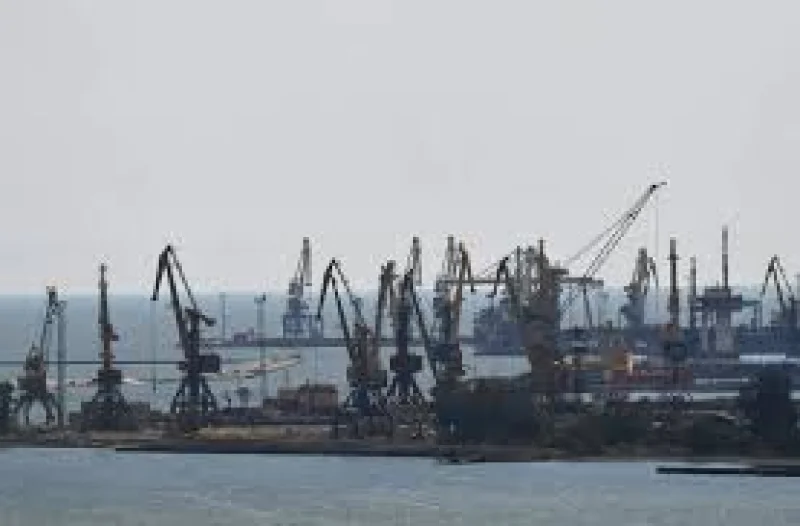
Russia suspended shipping through the Don-Azov canal on Friday after Ukrainian drones targeted 90 vessels in the Sea of Azov in less than a week, a disruption that has now reached one of Moscow’s most important maritime corridors. By Sunday, Robert Brovdi said his units had hit 10 tankers and four ferries overnight, adding that the shadow fleet was “noticeably shrinking.”
The shutdown matters because the Sea of Azov links Russia with eastern Europe and carries oil, grain and other goods to international markets. The Don-Azov canal ties into a Russian river network and the Caspian Sea, while the route via Kerch and the Bosphorus strait in Turkey is effectively shut down, leaving Moscow with fewer ways to move cargo by water.

Brovdi also said Ukrainian drones hit a major oil refinery in Syzran and carried out strikes on electricity substations in occupied Crimea. Residents in Syzran reported drones at 5am followed by loud explosions, and photographs and videos showed a large fire at the refinery with thick black smoke rising above an industrial area. The Syzran refinery supplies the Russian military and sends fuel abroad via the Azov-Kerch canal, so damage there reaches beyond one local site.
That wider pressure is exactly what makes the closure hard to dismiss as a temporary security measure. Andriy Zagorodnyuk said the Kremlin had lost control of a critical maritime corridor, while local channels reported two large oil spills off the coast of Taganrog on Sunday. He said the blockade was affecting military vessels and shipping carrying grain stolen from occupied southern Ukraine through the ports of Berdyansk and Mariupol, showing that the disruption is hitting both military logistics and export traffic at the same time.
Yevgeniya Gaber said the attacks fit a broader effort to degrade Russia’s ability to sustain offensive operations by cutting logistics, fuel supplies and transport infrastructure. She said there is not a single oil refinery that is unhit now, and the same pressure that is squeezing maritime logistics in the Sea of Azov is also being felt in occupied Crimea and along land routes. The unanswered question is how long Russia keeps the corridor closed, because the suspension that began on Friday has already outlasted the overnight drone wave that triggered it.