


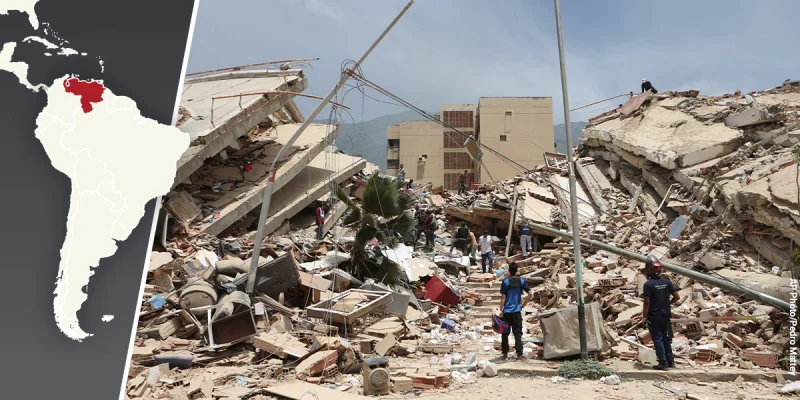
Two powerful earthquakes tore through Venezuela on June 24, leaving at least 589 people dead and nearly 3,000 injured after the country was hit by shocks measuring 7.2 and 7.5. Buildings came down, homes and apartment blocks collapsed, and the scale of the destruction was still becoming clear as rescuers worked through the aftermath.
The quakes struck La Guaira and Caracas, but the shaking did not stay there. People as far as 1,700 kilometers away reported feeling the tremors, a sign of how forcefully the ground moved before numerous aftershocks kept the emergency going. Electrical, gas and cellular telephone service outages spread across many areas, adding another layer of strain for families trying to reach one another and get help.
The numbers are still preliminary, but they are already devastating. Officials said at least 589 people had been killed and nearly 3,000 injured, and the report said one sister and five brothers were among the dead. That toll places the disaster among the most severe in recent memory, especially in a country already under pressure from years of crisis.
The damage and the casualty counts are the part that do not fit neatly together yet. The figures may rise as crews search collapsed buildings and check areas still cut off by outages, which is why the emergency declaration matters now: it gives authorities a framework for relief while the full scale of the loss is still being measured.
Authorities have already declared a state of emergency, and two Disaster Relief Committees have been appointed to coordinate the response. Quoted in the report, Jehovah is said to promise to “swallow up death forever” and “wipe away the tears,” a line that frames the grief now hanging over La Guaira and Caracas. For families waiting on news of the missing, that is the question that matters next: how many more people are trapped, and how many more will be found before the search slows.
