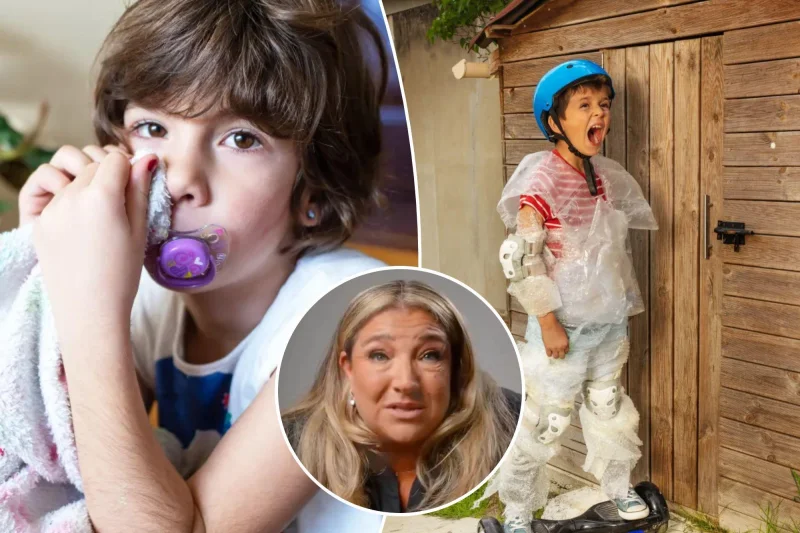
Jo Frost has gone public with a sharp warning about modern parenting, saying in a new Instagram video that children are being "slowly disabling our children" as convenience replaces basic life lessons. The post, which had been viewed over 875k times, pushed her criticism into the center of a debate that has clearly struck a nerve.
That is why people are looking at Jo Frost now: she did not offer a vague complaint, but a direct claim that today’s children are capable of more than they are being taught. Frost said she works with families every day and has seen children who can do the job, but are not being taught self-sufficiency. In her framing, the issue is not whether modern parenting is harder than it used to be — it is whether that difficulty has become an excuse for skipping the basics.

The reaction was immediate. Teachers and educators commented in support of her remarks, saying the gap shows up in ordinary routines that schools are then expected to fill. One commenter said parents are expecting schools, teachers and teaching assistants to train children to put on their socks and shoes, use the loo, and wash their hands afterwards. Another said daily living skills such as opening a jar, cleaning up after yourself, tying shoe laces and even holding a pencil are slowly diminishing in children.
That support matters because it stretches Frost’s point beyond parenting circles. The wider argument around child-rearing often centers on the internet and social media, and Frost’s comments land inside that reality rather than outside it. Known as Supernanny, she is speaking from a role built around family life, but the backing from teachers and others in the parenting space suggests she is tapping into a daily frustration that schools are seeing firsthand.
Still, the post leaves a clear gap. Frost says she works with families every day, yet she does not identify which families led her to this conclusion or how many examples shaped her view. What she does make plain is that the convenience of modern life has not erased the expectation that children should learn to manage themselves, and that argument is likely to keep drawing attention as long as schools keep being asked to teach the basics that used to begin at home.