



The Supreme Court agreed on Monday to hear a case that could define how long ICE may hold lawful permanent residents in immigration detention without giving them any chance to seek bond. The case asks whether people can be kept in custody for months or even longer while deportation proceedings are pending, with no individualized hearing at all.
The timing matters because the court has now put one of the sharpest questions in civil immigration detention back on its docket: when does prolonged custody stop being a routine part of the process and become something the Constitution does not allow? A bond hearing would not guarantee release. It would require a judge to look at the person’s flight risk and decide whether conditions can be set to make sure the person returns for later proceedings.
Carol Black is one of the two people at the center of the case. Black, a green-card holder who has lived in the United States legally for decades, moved to New York from Jamaica in 1983. After a 2000 conviction for a sex abuse crime and five years of probation that ended in 2005, ICE detained him in 2019 and started deportation proceedings based on that conviction. He was held for seven months before he sought a hearing to post bond, but the immigration judge would not grant one. He then filed a habeas petition in federal court, arguing that seven months without an individualized hearing violated due process.
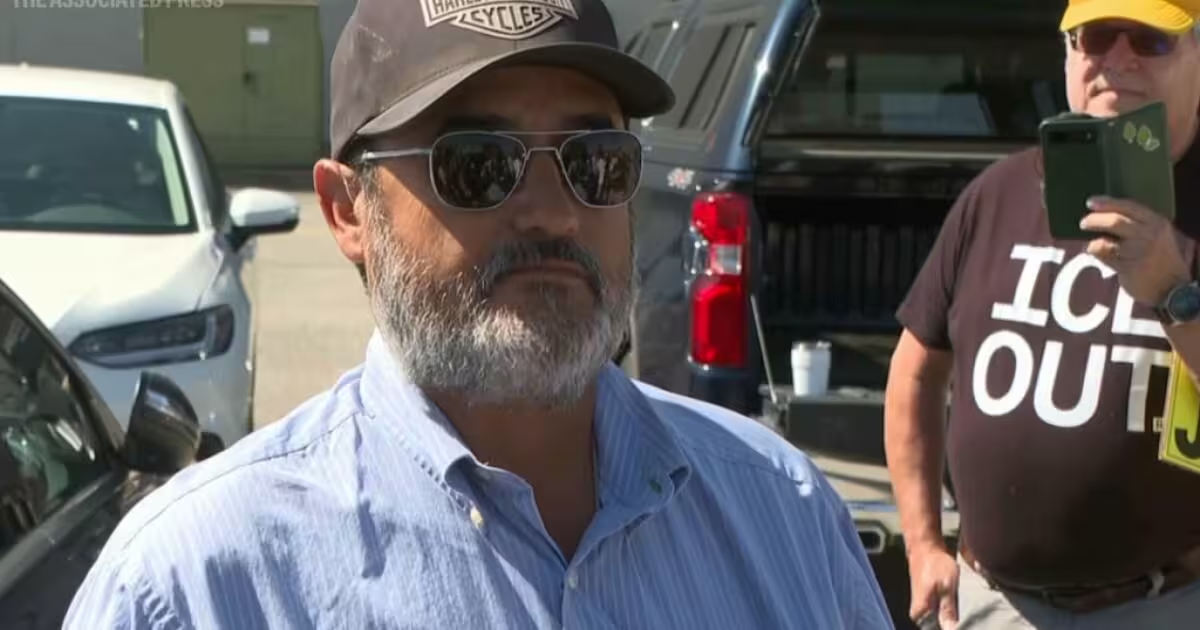
Keisy G.M. is the other detainee in the case. He is a lawful permanent resident from the Dominican Republic who has lived in New York City since 2011. After a fight that led to an assault charge, he served a two-year sentence and was released early. ICE later came to his home and took him into custody. He spent 21 months in immigration detention without a bond hearing before a separate court order during COVID led to his release.
The Court of Appeals for the 2nd Circuit said both Black and G.M. had constitutional due process rights to a bond hearing, noting that immigration proceedings are civil matters, not criminal ones. The federal government is pressing the opposite view, arguing that someone can be denied a bond hearing for the full length of detention while deportation proceedings continue. That position would leave ICE with broad power to hold lawful permanent residents for long stretches without any individualized check on whether custody is still justified.
The Supreme Court has long suggested that a statute allowing indefinite civil detention would raise serious constitutional problems, and this case puts that warning into direct conflict with the government’s reading of the law. The justices will hear the dispute next term, and their ruling will decide not only what happened to Black and G.M., but whether lawful permanent residents in ICE custody nationwide must get a bond hearing before months in detention turn into something much closer to open-ended confinement.
