


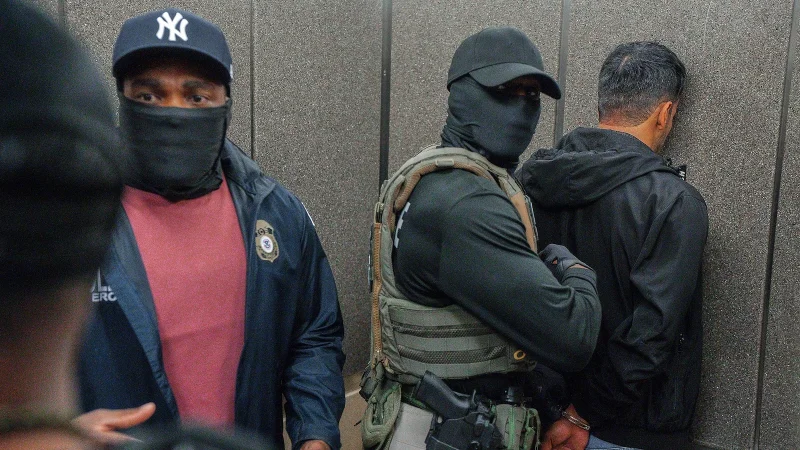
Internal United States Immigration and Customs Enforcement documents show that 591 people were held this week at Delaney Hall, the GEO Group-run detention center in Newark, down from 891 in early April. The sharper question is not just how many people were inside, but who they were: 76 had criminal convictions and 123 had pending charges.
Those numbers arrived as federal officials kept describing people in immigration custody as the “worst of the worst,” a claim that sits uneasily beside the records. The current data show that roughly 13 percent of those held at Delaney Hall had criminal convictions and about 21 percent had pending charges, leaving a large share with no conviction or charge reported in the records released this week.

ICE stopped publishing its regular detention figures in early April, which is why the public picture now depends on internal documents and outside reporting rather than routine federal updates. That matters because the earlier April records already showed one of 891 detainees rated a high security risk, while roughly 90 percent carried no ICE threat level at all, a detail that undercut the White House-backed message that agents were focusing on the most dangerous people.
An earlier analysis of detention data added to that gap. It found that among 99 detainees held with convictions, none had been found guilty of homicide, sexual assault or drug trafficking, and about 70 percent of those convictions were misdemeanors. In response to questions this week, the Department of Homeland Security did not provide current detainee records or criminal histories, but said it is a crime to enter the United States illegally, that everyone inside Delaney Hall broke the law and that people who come to the country illegally will be found and arrested.
For now, the most important unanswered question is the same one the government has made harder to answer: what the full criminal histories and ICE threat levels are for the people held at Delaney Hall now. Until the agency resumes publishing detention figures or releases the underlying records, each new count will keep testing a public claim that the numbers so far do not fully support.
