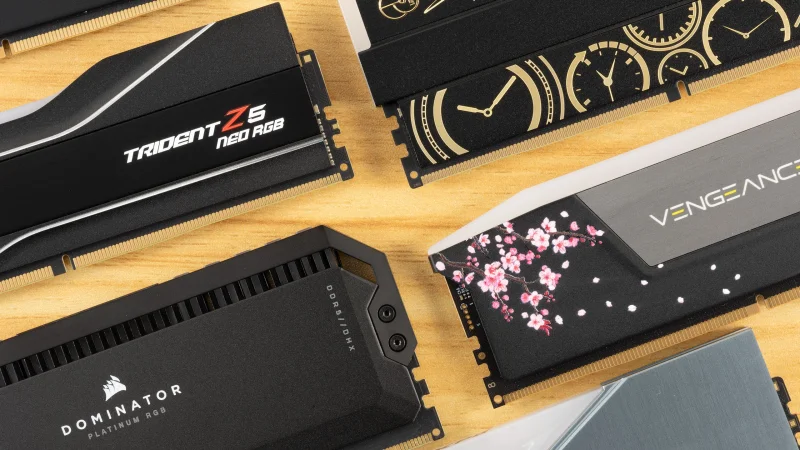
Intel said it is keeping older memory technologies in play and validating lower-memory configurations as the PC market works through a squeeze that has pushed prices up for months. Nish Neelalojanan said at Computex 2026 that "something has to give" on memory costs, and added that Intel will keep supporting products that can use older, cheaper parts when they are available.
The comments matter now because memory and storage are doing more to set system prices than CPUs are, at a time when buyers are still feeling the cost of inflation in components. Neelalojanan said Intel has products that support DDR4 on both desktop and mobile, and that the company is not end-of-lifing Raptor Lake, a signal that it is still willing to leave room for less expensive builds while the market stays tight.

That approach is already showing up in Wildcat Lake, which Intel is validating at lower configurations and which starts at 8GB in a single-channel design. Neelalojanan said large memory is "completely overshadowing" CPU prices, and that memory and storage now determine system price points more than the processor itself. For buyers, that means the cheapest machine is increasingly the one that can be built around older memory, not the fastest chip on the shelf.
The friction is that Intel is trying to answer a market problem it does not control. Neelalojanan said the company is working with a lot of indigenous memory suppliers and validating local-specific vendors in China and Indonesia to widen choice and create "pockets of relief," but he also said the over-inflation bears watching. What he did not say was how long the squeeze will last, and that leaves PC makers and system builders planning around a shortage whose end is still out of sight.