


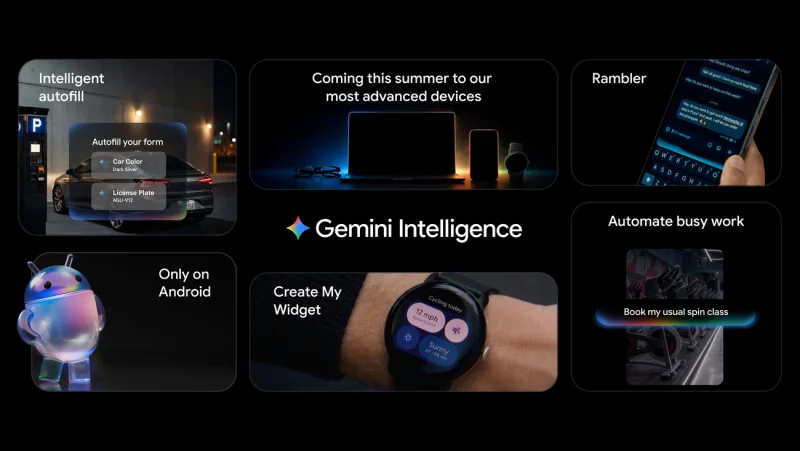
Android is moving beyond the idea of a phone operating system and into something closer to an intelligence system, with Google set to start rolling out Gemini Intelligence to select Samsung and Google devices this summer. The new features are designed to automate complex tasks, summarize web content and make form filling less of a chore.
The rollout begins with the latest Samsung Galaxy and Google Pixel phones, then expands later this year to other Android devices, including watches, cars, glasses and laptops. That wider push matters because it signals a change in how the platform is being sold: not just as software that runs on hardware, but as a layer of assistance built into everyday use.
Google said it has spent months fine-tuning its multi-step automation features on the Galaxy S26 and Pixel 10, testing them on popular food and rideshare apps before the launch. Gemini can already navigate tasks such as finding a class syllabus in Gmail and putting books into a cart, and it can turn a long grocery list in a notes app into a shopping cart for delivery. Users can also snap a photo of a travel brochure and ask Gemini to find a similar tour on Expedia for a group of six.

The company is also pushing the assistant deeper into browsing. Starting in late June, Android devices will get a smarter browsing assistant that can summarize content, compare information and fill out complex forms in Chrome. Alongside that, Rambler is being added to help users polish spoken thoughts into professional text messages, while natural language can be used to build custom widgets.
The friction in the rollout is timing and reach. Google is starting with premium hardware from Samsung and its own Pixel line, then widening access later, which leaves most Android users waiting even as the company describes the shift as a broad platform upgrade. The message is clear enough: the most advanced features will arrive first where Google can tightly control both the software and the device experience.
That is why the coming months matter. If the automation works as advertised, Android will no longer just answer prompts or open apps; it will increasingly act on a user’s behalf across email, shopping, travel and browsing. For now, the rollout on Samsung and Google phones is the first test of whether people will trust a phone that does more than respond — one that starts to do the work.
