


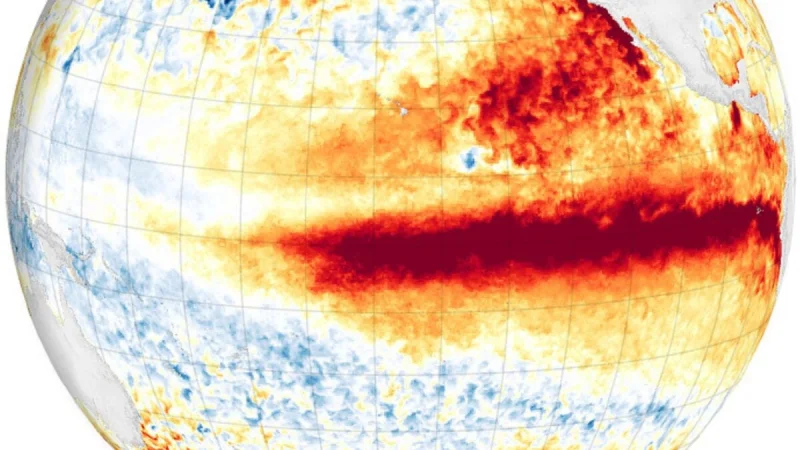
The planet’s dominant climate seesaw is back in the spotlight, and this time it is operating in a hotter world. The El Niño Southern Oscillation, a recurring shift between cool La Niña and warm El Niño conditions in the central and eastern tropical Pacific, is unfolding against the backdrop of human-driven climate change.
The pattern, known as ENSO, usually returns every two to seven years, according to NOAA. During El Niño, sea surface temperatures in the central and eastern tropical Pacific rise above average and the Pacific jet stream shifts southward, helping rearrange weather far beyond the ocean itself. A strong El Niño that developed in 2023 played a key role in making 2024 the hottest year on record, and when La Niña took hold in 2025, the global average temperature fell but did not drop back to 2022 levels.
That matters because 2025 became the third-warmest year on record, just behind 2023 and 2024. The signal is clear: the climate is still being pulled up by the long-term rise in greenhouse gases even when the Pacific tilts back toward its cooler phase. Michael McPhaden, a climate scientist who has spent years studying the system, called ENSO “the 800-pound gorilla in the climate zoo,” and said it drives outcomes that reach from deadly heat to storms and drought. “We have terrestrial heat waves that are very deadly, significant public health hazards, we have intensified storms, we have more extreme droughts,” he said.
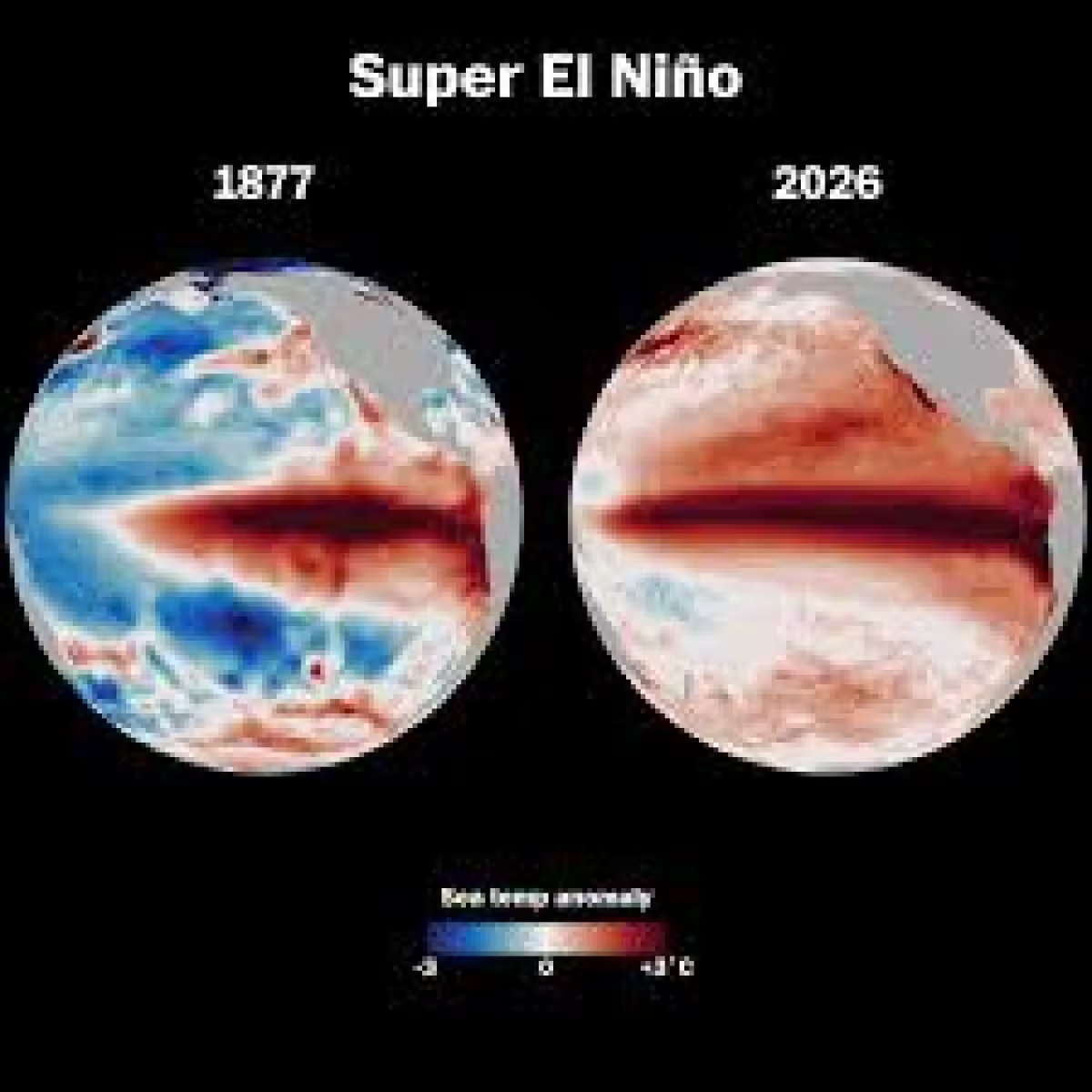
That context is why 2025 has stood out even before the Pacific fully settles into its next swing. Friederike Otto pointed to earlier this year, when conditions were still La Niña, and Australia was hit by a massive heat wave even though La Niña usually means the country is cooler. “So the anthropogenic effect really counteracted the effects of [La Niña],” she said. Her point is the one scientists keep returning to: the old natural rhythm still matters, but it no longer arrives on a blank slate.
The friction is that ENSO is supposed to swing both ways, yet the floor beneath it keeps rising. McPhaden said La Niña years in the 21st century are warmer than El Niño years in the 20th century because greenhouse gases have accumulated in the atmosphere. That means the climate no longer resets after each phase. Instead, every new cycle begins from a higher baseline, making the rebound from heat spikes weaker and the extremes more damaging.
For weather forecasters, disaster planners and the public, the next stage is not whether ENSO will return — it always does — but what kind of world it will return to. The answer today is one where the biggest year-to-year climate variation on the planet is still operating, but its effects are being amplified by a planet that has already warmed far beyond the old normal.
