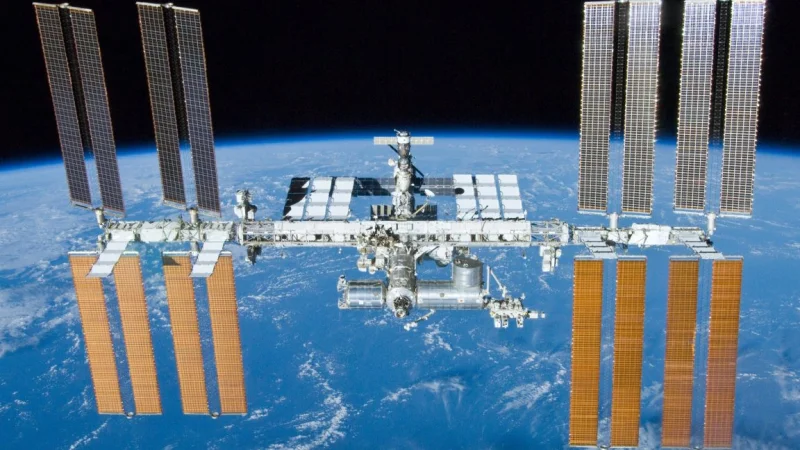
NASA said Thursday that the Russian segment of the International Space Station is leaking atmosphere into space again, reopening a problem engineers thought they had steadied earlier this year. The leak is in a small Russian module attached to the station that leads to a docking port.
The latest pressure drop was first noted on May 1 after Russian cosmonauts unloaded cargo from the Progress 95 cargo spacecraft, and NASA spokesman Josh Finch said the teams’ analysis pointed to a loss of about one pound per day. Roscosmos let pressure in the transfer tunnel fall gradually while tracking the rate, and NASA said the area is being kept at a lower pressure with small repressurizations as needed. Finch said there are no impacts to station operations, and NASA and Roscosmos are coordinating on next steps.

Engineers from both agencies have been tracking the leak for more than half a decade, and the source has been described as microscopic structural cracks. In January, NASA said pressure inside the PrK module had reached a stable configuration after multiple inspections and sealant applications. The PrK is a transfer tunnel attached to the Zvezda Service Module on the Russian side of the station.
That history is what makes the new readings so unwelcome. NASA officials have discussed the problem in a 5×5 risk matrix, where the Russian leaks were classified as a 5 on both likelihood and consequence, a rating tied in internal meetings to the possibility of catastrophic failure. Roscosmos has largely managed the issue over the years by keeping the hatch to the PrK module closed off from the rest of the station.
The station is already in the long tail of its planned life. It was due to be retired in 2030, but NASA and the U.S. Congress are considering extending operations to at least 2032, if not longer. Any extension would require support from international partners, including Russia, while NASA also wants private replacements ready before it stops flying the station. Some of the station’s modules have been in space for nearly three decades, which leaves little room for comfort when a sealed tunnel begins to leak again.