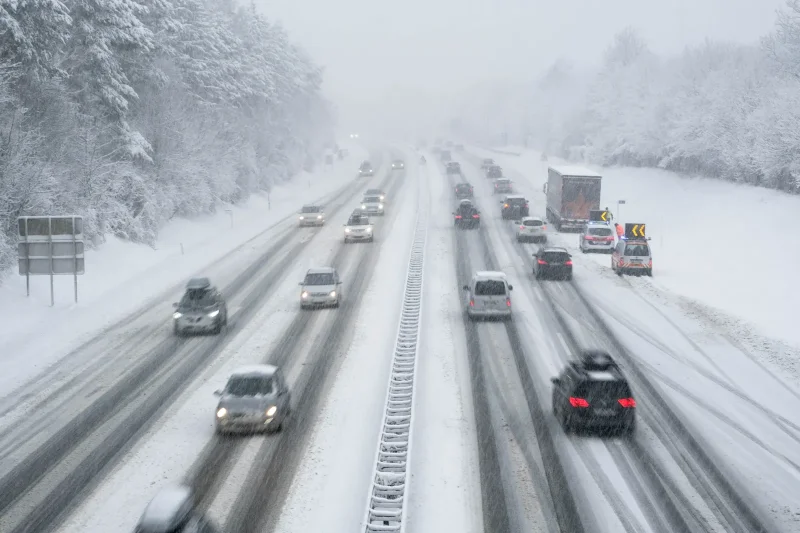
A late-season winter storm brought heavy snow, powerful wind and whiteout conditions to parts of Colorado and Wyoming this week, shutting down long stretches of Interstate 80 and reminding travelers that mountain and high-plains weather can still turn dangerous deep into May.
The strongest impacts hit southern Wyoming on Monday, May 18, when snow and blowing snow closed more than 200 miles of I-80 between Rock Springs and Laramie. By early Thursday, May 21, road reports showed much of the affected Wyoming corridor had improved to dry conditions, but the storm left behind a sharp travel warning for drivers crossing the Rockies, the High Plains and higher-elevation routes in the West.
I-80 Wyoming Snow Storm Caused Major Travel Problems
The most serious disruption centered on I-80 in southern Wyoming, one of the country’s key east-west freight corridors. Heavy snow, drifting and near-blizzard conditions forced closures across parts of Carbon, Albany and Sweetwater counties, stranding some motorists for hours as plow crews worked through poor visibility and deep drifts.
The Arlington and Elk Mountain areas, which are notorious for wind-driven winter hazards, saw some of the most difficult conditions. Gusts combined with wet snow to create visibility problems and slick road surfaces, while high-profile vehicles faced especially dangerous crosswinds.
The storm also caused power problems in parts of southern Wyoming, adding another layer of concern for residents and travelers caught in a system more typical of midwinter than the second half of May.
Colorado Winter Storm Warnings Hit The Front Range And Mountains
Colorado also faced winter storm warnings and heavy snow alerts, particularly in higher terrain and along parts of the Front Range. Snowfall totals varied sharply by elevation, with mountain locations and foothill communities seeing the greatest accumulation.
The late-season system followed another unusual May snow event earlier this month that brought significant snow to parts of Colorado and Wyoming. For Denver and nearby communities, the recent pattern has been especially jarring because it arrived after a dry winter and periods of spring warmth.
Heavy, wet snow is particularly damaging in May because trees have leafed out in many areas. Snow loading can bring down branches and power lines even when total accumulation is lower than a typical winter storm. That makes travel hazards only one part of the risk; outages, blocked side roads and falling limbs can linger after the snow stops.
I-5 Snow And Wind Closure Searches Reflect Wider Western Travel Concerns
Searches for an I-5 snow and wind closure also rose as Western drivers checked mountain routes. Current highway information in California listed no weather-related traffic restrictions on I-5 in Northern California early Thursday, while Oregon road reports showed mainly construction and maintenance alerts rather than a major snow closure on the interstate.
That distinction matters for travelers. I-5 can be vulnerable to snow and wind near the Siskiyou Summit and other high-elevation stretches, especially during colder storms, but the latest major confirmed shutdown from this system was on Wyoming’s I-80 corridor rather than I-5.
Drivers planning long-distance trips should still check live road conditions before leaving, because mountain passes can change quickly. A road that is open in the morning can require chains, restrict trucks or close later if snow showers redevelop or wind increases.

Why Heavy Snow In Late May Can Be So Dangerous
Late-season snowstorms can catch people off guard because many drivers have already shifted into spring travel routines. Some vehicles may no longer carry winter gear, and road crews may be managing construction season at the same time as snow removal.
The storm also arrived during a busy period for freight and holiday travel planning ahead of Memorial Day weekend. I-80 is a critical route for commercial trucking, and closures can ripple across supply chains when drivers are forced to wait, detour or shut down.
The biggest hazards in this type of storm include:
-
Sudden whiteout conditions on open stretches of highway
-
Heavy wet snow sticking to roads, trees and power lines
-
Strong crosswinds affecting trucks, trailers and RVs
-
Rapid refreezing after sunset or overnight
-
Reduced visibility in blowing snow even after snowfall eases
Conditions Improve, But Travel Caution Remains
By Thursday morning, road conditions across much of the previously affected I-80 route in Wyoming had improved, with dry pavement reported in several areas that had been hit hard earlier in the week. Freeze warnings and cold mornings remained a concern in parts of the region, and scattered showers were still possible as the broader pattern slowly moderated.
The key message for drivers is that the worst of the I-80 snowstorm has passed, but the risk has not fully disappeared. Late-May weather in Wyoming, Colorado and the higher West can still produce winter driving conditions with little margin for error.
Travelers should check highway cameras, state road maps and local alerts before crossing I-80, I-70, I-25 or I-5 mountain stretches. Those already on the road should keep extra fuel, warm clothing, water, phone chargers and emergency supplies in the vehicle. The storm’s main lesson is straightforward: even near the start of summer travel season, the West’s high-elevation highways can still behave like winter roads.