


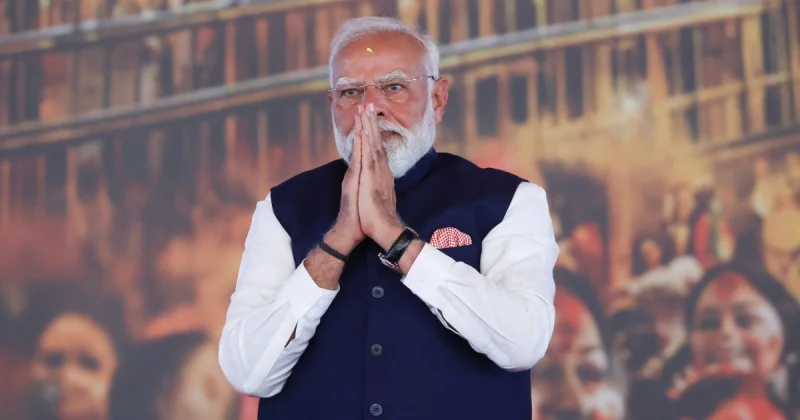
Narendra Modi faced a sharp challenge from a Norwegian journalist on Monday in Oslo, where he was on a two-day visit as part of a tour of northern Europe. Helle Lyng Svendsen, a reporter for the Norwegian daily Dagsavisen, asked the Indian prime minister why he would not take questions from what she called the freest press in the world.
Modi did not answer and walked out of the conference room after Svendsen spoke up. He had met Prime Minister Jonas Gahr Store earlier in the day and had written on X that he was addressing a press meet with Norway’s leader, but reporters were not allowed to put questions to him at the event.
The exchange stood out because Modi has not held a single news conference in India during his 12-year term in office, and he has only rarely taken questions abroad, including twice in Washington in 2023. Norway, by contrast, is a place where visiting leaders are usually expected to face at least a few questions from reporters, even if the exchange is brief.
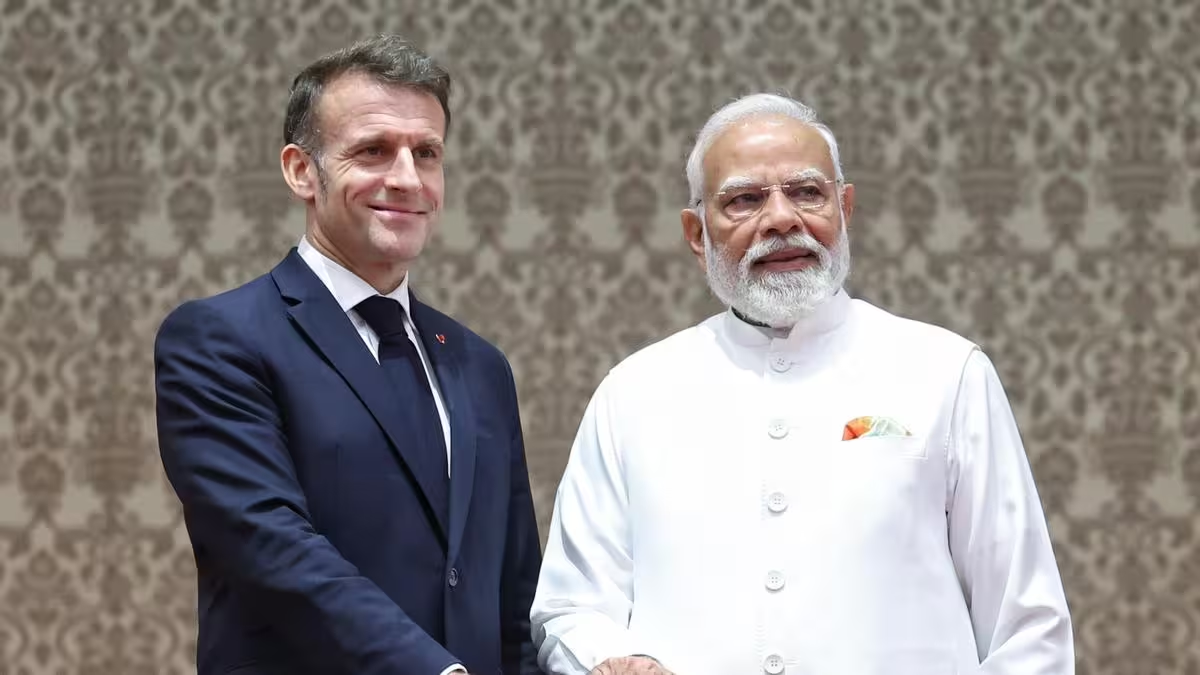
Svendsen later followed Modi out of the room and asked whether he deserved the trust of the government. She later wrote on X that in Norway, foreign leaders usually get a small number of questions, and that was not the case with Modi. She told Al Jazeera on Tuesday that it was the duty of journalists to try to ask questions, adding that she felt privileged to work from one of the safest countries in the world while knowing the situation facing her colleagues in India was alarming.
The confrontation came as Modi was moving through a tightly packed diplomatic stop in Norway, where he was scheduled to take part in the third edition of the India-Nordic Summit on Tuesday before leaving for Italy. Later on Monday, Svendsen questioned Sibi George, the Secretary (West) in India’s Ministry of External Affairs, about human rights in India at a separate news conference.
India’s press freedom standing has become part of the backdrop to that exchange. The country is ranked 157th out of 180 countries in the 2026 World Press Freedom Index, and media organisations have repeatedly warned that its ranking has been sliding. Human rights organisations have also said religious minorities in India have faced increasing attacks in recent years, while critics point to laws on interreligious marriages and religious conversions.
For Modi, the episode was a reminder that the questions he avoids at home now follow him abroad. For journalists such as Svendsen, it was a brief encounter but a pointed one: if leaders do not want to be pressed in public, reporters will keep asking anyway.
