


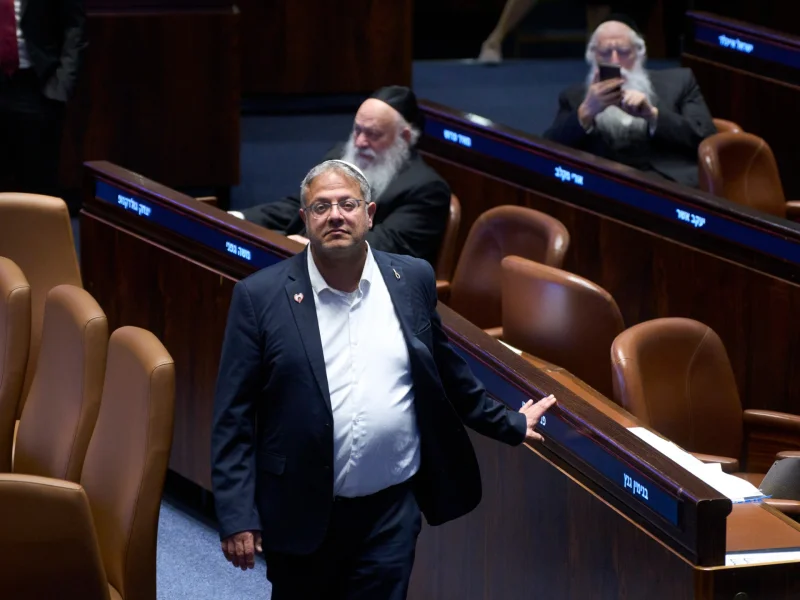
At least 87 activists abducted by Israeli forces from a Gaza-bound aid flotilla have begun a hunger strike, and the fallout widened on Wednesday after Italian Prime Minister Giorgia Meloni called the treatment of the detainees unacceptable. Italy summoned the Israeli ambassador after Meloni condemned a video posted by Itamar Ben-Gvir showing him taunting activists as they knelt on the floor with their hands tied.
The Global Sumud Flotilla said the hunger strike was launched in protest of their illegal abduction and in solidarity with the over 9,500 Palestinian hostages held in Israeli dungeons. Israeli forces took six people on board the Lina al-Nabulsi boat late on Tuesday evening, while Israel’s Ministry of Foreign Affairs said later that its forces were taking hundreds of flotilla participants to Israel. A ministry spokesman said all 430 activists had been transferred to Israeli vessels and were making their way to Israel.

The flotilla had more than 50 vessels that left Turkiye’s port city of Marmaris last week for Gaza, part of an effort to break Israel’s blockade of the enclave. Organisers said Israeli forces began overtaking the vessels in international waters off the coast of Cyprus on Monday, raided boats, fired rubber bullets and abducted participants. Countries including Turkiye, Spain, Jordan, Pakistan, Bangladesh, Brazil, Indonesia, Colombia, Libya and the Maldives have denounced the interceptions as blatant violations of international law and international humanitarian law.
Meloni said the images of Ben Gvir were unacceptable and added that the protesters, including many Italian citizens, were being subjected to treatment that violated their human dignity. South Korean President Lee Jae Myung also weighed in on Wednesday, saying Israel’s actions were “way out of line” and questioning the legal basis for seizing and detaining third-country vessels. Nine Indonesian citizens were among those held, according to a spokesperson for Indonesia’s Ministry of Foreign Affairs, and about 15 Irish citizens were being held, including Margaret Connolly, a doctor and the sister of Irish President Catherine Connolly.
The confrontation has become more than another interception at sea. With activists on hunger strike, foreign governments denouncing the operation and Israel insisting the detainees will be routed through consular channels, the dispute is now centered on whether the flotilla was treated as an aid mission or as a security challenge from the moment the first vessel was boarded.
