


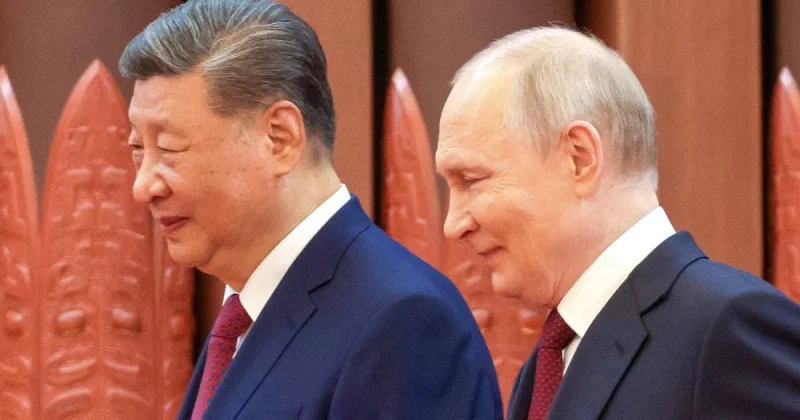
Xi Jinping and Vladimir Putin used a high-profile meeting in Beijing on Wednesday to condemn Donald Trump's plan for a $175bn Golden Dome defence system, a move that would create a new missile field in the Midwest. In a joint statement, China and Russia warned of a danger of fragmentation in the international community and a return to the law of the jungle.
The attack on the Golden Dome plan came as the two leaders presented their relationship as steady despite pressure from Washington. Xi said the two countries had deepened political trust and strategic coordination with a resilience that remained unyielding despite trials and tribulations. Putin said energy was the driving force of economic cooperation in Russian-Chinese relations, adding that their interaction and economic ties showed strong momentum even against adverse external factors.
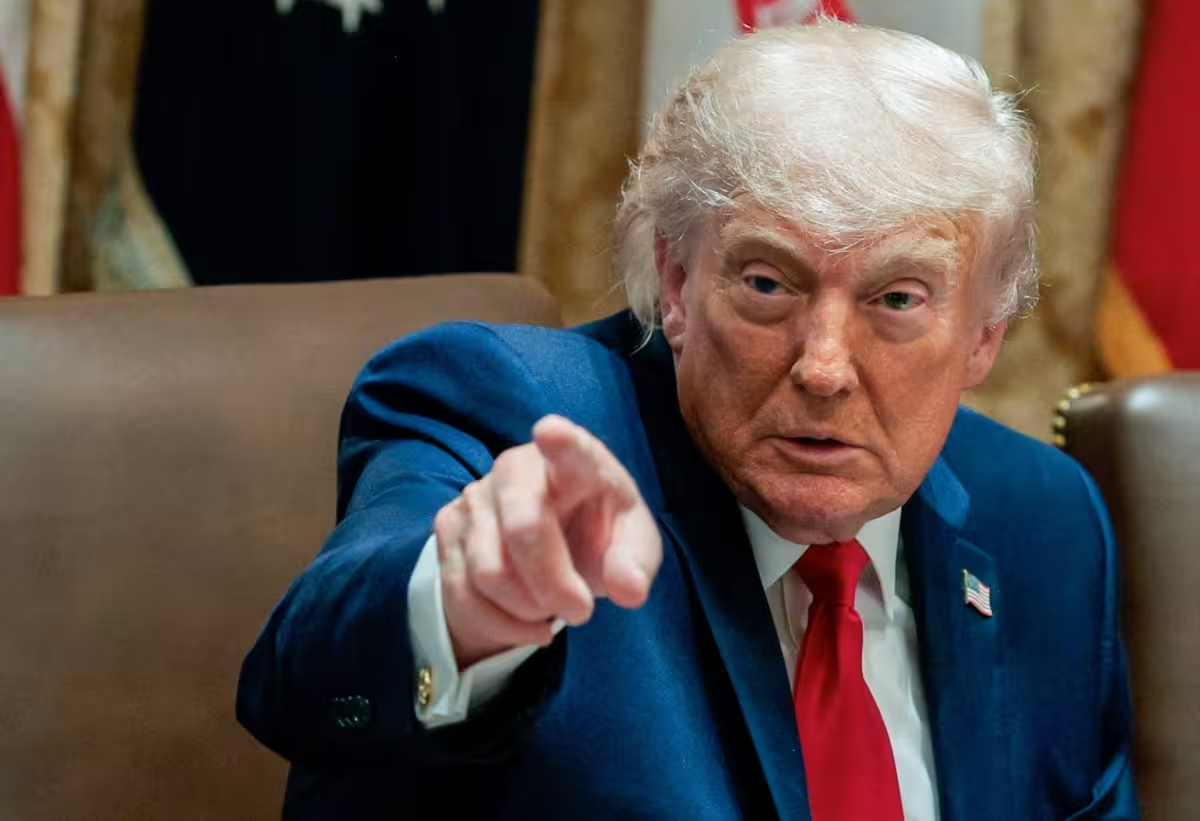
Xi's remarks carried particular weight because he said a comprehensive ceasefire was of utmost urgency in the conflict involving the United States, Israel and Iran, warning that resuming hostilities would be even more inadvisable and that keeping negotiations alive was especially important. The comments underscored how Beijing is trying to cast itself as a defender of stability while sharply criticizing a U.S. missile-defense project it sees as another escalation in an already brittle global order.
The meeting in Beijing was also designed to push cooperation beyond rhetoric. The two sides were expected to sign about 40 agreements covering the economy, tourism, education and energy, but they did not reach a new consensus on the long-delayed Power of Siberia 2 gas pipeline. That gap matters because energy security remained Putin's priority, and China has become a major buyer of Russian oil after Western countries largely cut economic ties with Moscow in response to Russia's full-scale invasion of Ukraine.
The timing sharpened the message. The last U.S.-Russia arms control treaty fell by the wayside in February after Trump failed to respond to Moscow's proposal to extend it by a year, leaving the two nuclear powers without a binding framework at a moment when both Beijing and Moscow are pressing their own case against what they see as a U.S.-led order. A week before the Beijing summit, Xi hosted Trump in Beijing, and the sequence has left the Chinese leader and Putin trying to project alignment even as their own strategic interests are not perfectly aligned. For now, the public line is unity; the unresolved pipeline shows where the limits still are.
