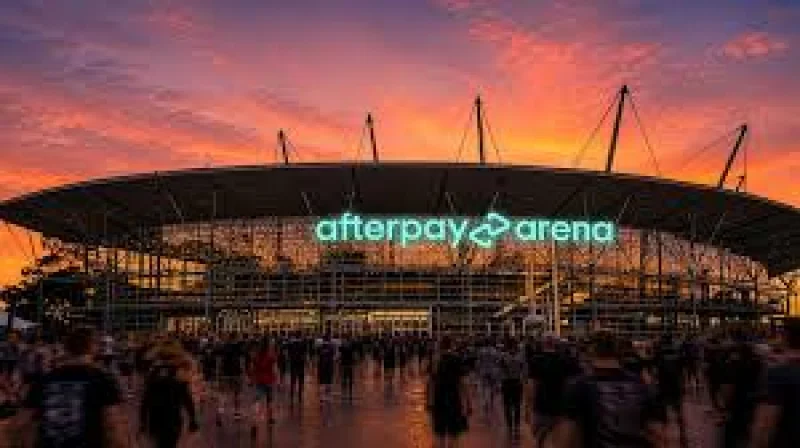
Qudos Bank Arena will be renamed Afterpay Arena under a five-year deal that is set to officially begin in the coming months, turning Sydney’s biggest indoor sports and entertainment venue into a new kind of branded arena. Until then, the building will keep operating under its current name and will continue to host its full calendar of events during the transition.
The move is more than a naming exercise. The physical overhaul will include new external signage and interior refreshes, while fully integrated Afterpay and Square touchpoints are set to run throughout the venue. That means payment flexibility from the moment fans buy a ticket through to food and merchandise purchases inside the arena, which has a capacity of about 21,000 and roughly 18,000 seats.
The deal lands at a venue already central to Sydney’s live events market. Located in Sydney Olympic Park, the arena is the largest permanent indoor sports and entertainment venue in Australia and the home court of the Sydney Kings. It has also hosted a broad mix of major events, from concerts by Billie Eilish and Dua Lipa to Hillsong conferences and a talk by Indian Prime Minister Narendra Modi.

The timing matters because the venue enters the rebrand with real momentum. Billboard magazine recently ranked it the fifth best live music venue in the world, and the latest addition to its profile is a commercial partnership built around a consumer pressure point: paying upfront. Afterpay research found that 94 per cent of cost-affected event-goers had missed events because of upfront payment barriers, while over half of consumers surveyed said they would be more likely to attend if flexible payment options were available.
Afterpay co-founder and chief executive Nick Molnar said live experiences were among the most meaningful ways people choose to spend their time and that the company wanted to be the brand that made sure nothing got in the way of that. The message fits the deal’s pitch, but it also underlines the trade-off at the heart of the rebrand: a venue built on cultural prestige is being tied more tightly than before to a payments company’s retail model.
For now, the old name remains on the building while the new one is prepared behind the scenes. When the change takes effect, it will not just be on the façade. It will be built into the way fans move through the arena, from buying the ticket to leaving with a jersey or a drink, and that is what makes the shift likely to be noticed long after the signage goes up.